

Can You Sue Trucking Companies for Poor Vehicle Maintenance in Dayton?
Your Rights After a Preventable Truck Accident in Dayton
When a commercial truck with faulty brakes, worn tires, or other maintenance failures causes devastating injuries on Dayton highways, victims can hold the trucking company accountable. Trucking companies have a legal duty to maintain their vehicles according to strict federal safety standards, and violations create grounds for compensation claims. Federal regulations under 49 CFR Part 396, along with parts and accessories requirements under 49 CFR Part 393, establish clear maintenance expectations, and violations of these standards can form the foundation of a personal injury claim against negligent carriers.
💡 Pro Tip: Document everything at the accident scene if possible, take photos of visible vehicle defects like tire damage, fluid leaks, or broken lights, as this evidence can be crucial for proving maintenance negligence.
Take the first step toward justice by connecting with Horenstein Nicholson & Blumenthal. If maintenance lapses have turned your roadway encounter into a nightmare, our team is here to guide you. Reach out at 9372247200 or contact us to discuss your case today.
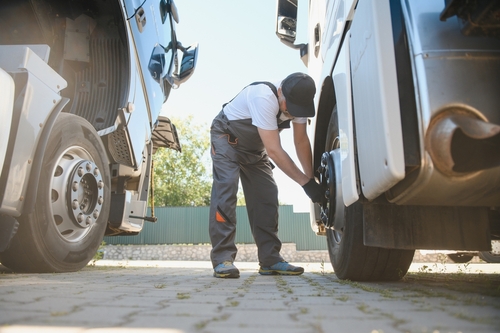
Federal Maintenance Standards That Protect Dayton Drivers
Commercial trucking companies operating through Dayton must comply with comprehensive federal maintenance regulations. The Federal Motor Carrier Safety Administration (FMCSA) mandates systematic inspection, repair, and maintenance programs under 49 CFR Part 396, along with parts and accessories requirements under 49 CFR Part 393, which apply to all interstate carriers and many intrastate operations. These regulations require detailed maintenance records, regular inspections, and immediate correction of safety-compromising defects. When a truck accident attorney in Dayton investigates a crash, these maintenance records often reveal patterns of neglect that directly contributed to the collision.
💡 Pro Tip: Request a copy of the police report immediately after your accident, officers trained in commercial vehicle enforcement often note maintenance violations that can strengthen your claim.
Building Your Case: From Accident to Resolution
Understanding the timeline of a truck accident claim involving maintenance failures helps victims prepare for the legal process. The journey from crash to compensation follows a structured path, beginning immediately after the accident with evidence preservation and extending through investigation, negotiation, and potentially trial. Federal regulations provide a framework for proving maintenance failures, but building a compelling case requires strategic timing and thorough documentation.
- Immediate post-accident documentation of vehicle condition and preservation of maintenance records through legal holds
- Investigation phase revealing maintenance history, including review of driver vehicle inspection reports (DVIRs) and company maintenance logs
- Discovery of violations against CVSA’s 2025 North American Standard Out-of-Service Criteria, which took effect April 1, 2025
- Expert analysis linking specific maintenance failures to the accident causation
- Settlement negotiations or trial preparation based on the strength of maintenance violation evidence
Holding Negligent Trucking Companies Accountable in Dayton Courts
When trucking companies cut corners on maintenance, Dayton residents pay the price with their safety. Successfully pursuing claims requires understanding federal regulations and Ohio’s modified comparative negligence rule, which allows recovery as long as you’re not more than 50% at fault. Horenstein Nicholson & Blumenthal brings extensive experience in commercial vehicle cases, understanding how to leverage maintenance violations to build compelling claims. Trucking companies often have teams of lawyers and insurers working to minimize liability, which is why trusted legal representation becomes essential for leveling the playing field and securing fair compensation.
💡 Pro Tip: Never accept a quick settlement offer from a trucking company’s insurance without legal review, initial offers rarely account for the full impact of maintenance negligence on your injuries and future needs.
Critical Maintenance Violations That Lead to Dayton Truck Accidents
The 2025 CVSA criteria highlight specific equipment failures that transform routine maintenance issues into dangerous out-of-service violations. For trucks operating through Dayton, certain defects pose such immediate hazards that enforcement officers must remove vehicles from the road immediately. The updated criteria specifically address tire conditions, noting that a tire without an automatic tire inflation system (ATIS) becomes an out-of-service violation when it shows a noticeable leak in the tread area, a seemingly minor issue that can lead to catastrophic blowouts at highway speeds.
Brake System Failures and Their Devastating Impact
Brake system defects cause some of the most severe accidents on Dayton highways. The 2025 CVSA criteria include specific brake-related conditions that mandate immediate removal from service, recognizing that inoperative brakes transform an 80,000-pound truck into an uncontrollable weapon. When investigating these cases, a Dayton Ohio truck accident lawyer examines not just the immediate brake failure but the pattern of deferred maintenance that allowed the condition to develop. These investigations often reveal companies knew about developing brake problems but chose to keep trucks in service to meet delivery deadlines.
💡 Pro Tip: If you hear grinding, squealing, or see smoke from a truck’s wheels before an accident, mention these observations to your attorney, they indicate brake problems that should have triggered immediate maintenance action.
Proving Trucking Company Liability Through Maintenance Records
Federal law creates a paper trail that skilled attorneys use to prove maintenance negligence in Dayton truck accident cases. The FMCSA’s updated DVIR rule, while removing requirements for no-defect reports in interstate commerce, still mandates detailed documentation when problems exist. This harmonized inspection system means trucking companies cannot claim ignorance about developing maintenance issues. When pursuing trucking company liability, attorneys examine these records alongside dispatch logs, revealing when companies pushed drivers to operate vehicles with known defects.
The Role of CVSA Enforcement in Strengthening Your Claim
CVSA-certified enforcement personnel in Ohio apply the 2025 North American Standard Out-of-Service Criteria during roadside inspections, creating official records that become powerful evidence in civil litigation. When inspections reveal maintenance violations, particularly those requiring out-of-service status, they establish clear negligence standards. A Dayton commercial vehicle attorney can use these enforcement actions to demonstrate that maintenance failures weren’t just technical violations but represented conscious choices to prioritize profits over public safety.
Frequently Asked Questions
Understanding Your Rights in Maintenance-Related Truck Crashes
Victims of truck accidents caused by poor maintenance often have numerous questions about their legal options and the claims process, ranging from immediate steps after an accident to long-term implications for compensation and recovery.
💡 Pro Tip: Write down all your questions before meeting with an attorney, no concern is too small when it comes to understanding your rights after a maintenance-related truck accident.
Navigating the Legal Process
The path from accident to resolution involves multiple stages, each presenting opportunities to strengthen your case against negligent trucking companies.
1. Can I sue a trucking company if poor maintenance caused my accident in Dayton?
Yes, trucking companies can be held liable when their failure to maintain vehicles according to federal standards causes accidents. Under 49 CFR Part 396, along with parts and accessories requirements in 49 CFR Part 393, carriers must implement systematic maintenance programs, and violations provide grounds for civil lawsuits. Your Dayton Ohio truck accident attorney will prove that specific maintenance failures contributed to your crash and resulting injuries.
2. What maintenance violations commonly lead to truck accidents in Ohio?
The most dangerous maintenance failures include brake system defects, tire problems (including tread area leaks on non-ATIS equipped tires), steering mechanism issues, and lighting deficiencies. The 2025 CVSA criteria specifically identify conditions requiring immediate out-of-service status, and when these violations cause accidents, they demonstrate clear negligence.
3. How long do I have to file a truck accident lawsuit in Dayton for maintenance negligence?
Ohio law establishes specific time limits for filing personal injury claims. However, exceptions may exist in limited circumstances, such as when maintenance violations are discovered later through investigation. Consulting with a Dayton truck injury lawyer immediately after your accident ensures you don’t miss critical filing deadlines while evidence remains available.
4. What if I was partially at fault when the truck had maintenance problems?
Ohio’s modified comparative negligence rule allows you to recover damages as long as you’re not more than 50% at fault. Even if you made a minor driving error, you can still pursue compensation if the trucking company’s maintenance failures substantially contributed to the crash. Your attorney will work to minimize your assigned fault percentage while emphasizing the carrier’s maintenance negligence.
5. How do Ohio truck accident claims differ from regular car accident cases?
Truck accident cases involving maintenance failures require understanding complex federal regulations, accessing specialized maintenance records, and often hiring commercial vehicle experts. The stakes are typically higher due to severe injuries, and trucking companies deploy aggressive legal teams. Working with an attorney experienced with Ohio truck accident laws and federal trucking regulations becomes essential for achieving fair outcomes.
Work with a Trusted Truck Accident Lawyer
Pursuing compensation from trucking companies for maintenance-related accidents requires navigating complex federal regulations while building evidence that clearly establishes negligence. Victims need attorneys who understand both the technical aspects of commercial vehicle maintenance standards and the legal strategies necessary to hold large trucking companies accountable. When maintenance failures cause life-altering injuries, having the right legal team makes the difference between accepting inadequate settlements and securing compensation that truly reflects the impact of preventable corporate negligence.
If a trucking mishap has left you grappling with the aftermath of poor vehicle maintenance, let Horenstein Nicholson & Blumenthal guide you toward justice. Reach out today at 9372247200 or contact us to ensure your right to fair compensation is protected.
Related Posts

What Is Substantial Aggravation of a Pre-Existing Condition in Ohio?
When a Work Injury Makes an Old Problem Much Worse Key Takeaways: In Ohio, a substantial aggravation of a pre-existing condition occurs when a work injury meaningfully worsens an existing health problem, compensable under R.C. § 4123.01(C)(4) only when documented by objective diagnostic findings, objective clinical findings, or objective test results, not subjective pain complaints alone. Ohio’s no-fault system means having a bad back, arthritic joints,…
READ MORE
What Is an MCS-90 Endorsement in a Dayton Truck Accident Claim?
How the MCS-90 Endorsement Truck Accident Protection Actually Works The endorsement is a promise made to the public, not just to the insured carrier. Under 49 CFR 387.15, the insurer agrees to pay any final judgment recovered against the insured for public liability arising from negligent operation of motor vehicles, up to the applicable minimum limit. Because the obligation runs to the public, courts have held…
READ MORE
What Is the No-Zone Around Trucks in Dayton, Ohio?
Understanding the Hidden Danger of Truck Blind Spots on Dayton Roads Key Takeaways: The no-zone is the set of blind spot areas at the front, back, and both sides of a large truck where a smaller vehicle disappears from the driver’s view, creating a core hazard on Dayton roads like I-75 and U.S. 35. The right side is the largest blind spot and the rear leaves…
READ MOREWhat Is a Hit and Run Injury Claim Under Ohio Law for Dayton Victims?
Understanding Your Rights After a Hit-Skip Crash in the Miami Valley Key Takeaways: A hit and run injury claim under Ohio law allows Dayton victims to seek compensation after a driver flees, primarily through their own uninsured motorist (UM) coverage, since Ohio treats a fleeing driver like an uninsured one. Recovery remains possible even when the driver is never identified, provided independent corroborating evidence such as…
READ MORE
Should Dayton Drivers Move a Car After a Minor Ohio Collision?
The Short Answer for Dayton Drivers Facing a Fender Bender Key Takeaways: Dayton drivers can move a car after a minor Ohio collision, but only after fulfilling their legal duties first. Ohio law requires you to stop immediately, remain at the scene, and exchange identifying information including name, address, and vehicle registration before repositioning any vehicle. Once you’ve met those duties and documented the original positions…
READ MORE
What Should Dayton Workers Weigh Before Accepting a Lump Sum Settlement?
Understanding Lump Sum Settlements in Ohio’s Workers’ Comp System Key Takeaways: Before accepting a lump sum settlement (LSS), Dayton workers should weigh immediate financial relief against long-term rights they may permanently give up. An LSS closes all or part of a claim for a one-time payment often discounted to present value. Either party can initiate a settlement under Ohio law, so an employer’s offer may reflect…
READ MORE
What Makes a Dayton Truck Accident Case Harder to Prove Than a Car Crash?
Why Trucking Claims Demand a Different Playbook Than Ordinary Crashes Key Takeaways: A Dayton truck accident case is harder to prove than a car crash because liability can be spread across multiple parties, the driver, carrier, maintenance provider, and cargo loaders, each with separate insurance and defense counsel. Evidence is more technical, requiring driver logs, hours-of-service data, maintenance records, and black box downloads held by trucking…
READ MOREGet HNB to Help You
What our client has to say

Laurie Ruscillo
in Google Reviews
“During a very difficult time, there was compassion and a truly dedicated effort from the staff for a favorable outcome with a disability claim from the Social Security Administration.”
Related Posts
What Is Substantial Aggravation of a Pre-Existing Condition in Ohio?
When a Work Injury Makes an Old Problem Much Worse Key Takeaways: In Ohio, a substantial aggravation of a pre-existing condition occurs when a work injury meaningfully worsens an existing health problem, compensable under R.C. § 4123.01(C)(4) only when documented by objective diagnostic findings, objective clinical findings, or objective test results, not subjective pain complaints alone. Ohio’s no-fault system means having a bad back, arthritic joints,…
READ MORE What Is an MCS-90 Endorsement in a Dayton Truck Accident Claim?
How the MCS-90 Endorsement Truck Accident Protection Actually Works The endorsement is a promise made to the public, not just to the insured carrier. Under 49 CFR 387.15, the insurer agrees to pay any final judgment recovered against the insured for public liability arising from negligent operation of motor vehicles, up to the applicable minimum limit. Because the obligation runs to the public, courts have held…
READ MORE What Is the No-Zone Around Trucks in Dayton, Ohio?
Understanding the Hidden Danger of Truck Blind Spots on Dayton Roads Key Takeaways: The no-zone is the set of blind spot areas at the front, back, and both sides of a large truck where a smaller vehicle disappears from the driver’s view, creating a core hazard on Dayton roads like I-75 and U.S. 35. The right side is the largest blind spot and the rear leaves…
READ MOREWhat Is a Hit and Run Injury Claim Under Ohio Law for Dayton Victims?
Understanding Your Rights After a Hit-Skip Crash in the Miami Valley Key Takeaways: A hit and run injury claim under Ohio law allows Dayton victims to seek compensation after a driver flees, primarily through their own uninsured motorist (UM) coverage, since Ohio treats a fleeing driver like an uninsured one. Recovery remains possible even when the driver is never identified, provided independent corroborating evidence such as…
READ MORE Should Dayton Drivers Move a Car After a Minor Ohio Collision?
The Short Answer for Dayton Drivers Facing a Fender Bender Key Takeaways: Dayton drivers can move a car after a minor Ohio collision, but only after fulfilling their legal duties first. Ohio law requires you to stop immediately, remain at the scene, and exchange identifying information including name, address, and vehicle registration before repositioning any vehicle. Once you’ve met those duties and documented the original positions…
READ MORE What Should Dayton Workers Weigh Before Accepting a Lump Sum Settlement?
Understanding Lump Sum Settlements in Ohio’s Workers’ Comp System Key Takeaways: Before accepting a lump sum settlement (LSS), Dayton workers should weigh immediate financial relief against long-term rights they may permanently give up. An LSS closes all or part of a claim for a one-time payment often discounted to present value. Either party can initiate a settlement under Ohio law, so an employer’s offer may reflect…
READ MORE What Makes a Dayton Truck Accident Case Harder to Prove Than a Car Crash?
Why Trucking Claims Demand a Different Playbook Than Ordinary Crashes Key Takeaways: A Dayton truck accident case is harder to prove than a car crash because liability can be spread across multiple parties, the driver, carrier, maintenance provider, and cargo loaders, each with separate insurance and defense counsel. Evidence is more technical, requiring driver logs, hours-of-service data, maintenance records, and black box downloads held by trucking…
READ MORE


Phone

Hours
AVAILABLE 24/7
OFFICES
Dayton, OH
220 E. Monument Ave.
Suite 305
Dayton, OH 45402