

What Rights Do Dayton Workers Have After a Job Injury in Ohio?
Understanding Your Rights After a Workplace Injury in Dayton
Getting hurt on the job can turn your life upside down. If you work in one of Dayton’s manufacturing plants, warehouses, hospitals, or public-sector offices, you may be wondering what protections Ohio law provides. The good news is that Ohio operates a no-fault workers’ compensation system, which means you do not need to prove your employer was negligent to receive benefits. Under Ohio Revised Code § 4123.01, “injury” is broadly defined as any injury received in the course of and arising out of employment, whether caused by external accidental means or accidental in character and result. Knowing your rights is the first step toward securing the medical care and wage-replacement benefits you deserve.
If you were recently injured at work and need guidance, Horenstein Nicholson & Blumenthal is ready to help. Call 937-224-7200 or contact us today to discuss your Dayton workplace injury claim.
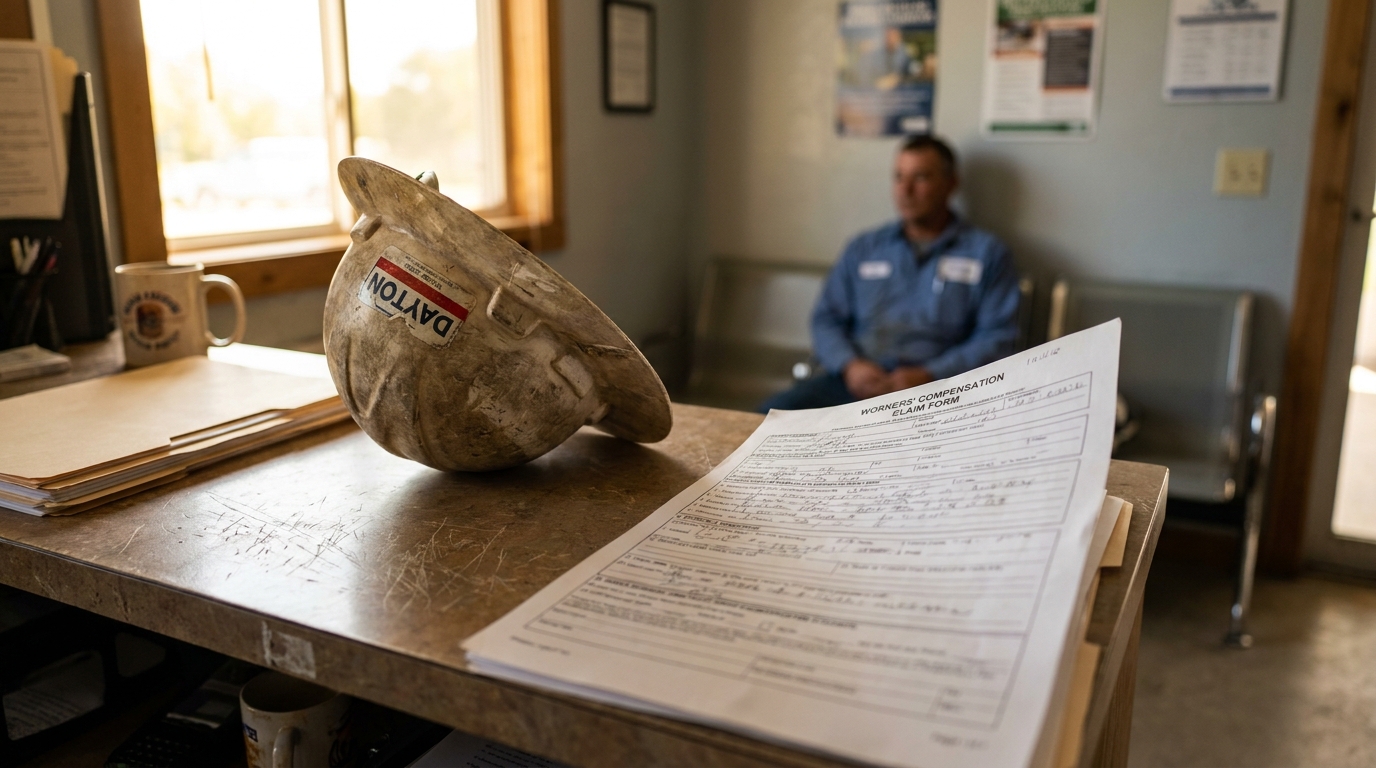
Who Qualifies as a Covered Employee in Ohio
Ohio’s workers’ compensation system covers a wide range of workers. Under § 4123.01(A)(1)(a)-(b), “employee” includes every person in service of the state, counties, municipalities, townships, school districts, and private employers with one or more employees. This extends to aliens and minors. Whether you are a full-time warehouse associate, part-time healthcare worker, or salaried public employee in Montgomery County, you generally fall under this protection.
Independent contractors may not qualify depending on how the working relationship is structured. If you are unsure whether your role qualifies, an Ohio workers’ comp attorney can review your situation.
💡 Pro Tip: Keep a copy of your job description, pay stubs, and employment agreements. These documents can help establish your status as a covered employee if your employer disputes your claim.
How Ohio Law Defines a Compensable Workplace Injury
Not every injury that happens at work automatically qualifies for benefits. Ohio Revised Code § 4123.01(C) defines “injury” as one received in the course of and arising out of your employment. This means there must be a direct connection between your job duties and the harm suffered. A slip on a wet factory floor during your shift would generally qualify, while an injury during a personal errand on your lunch break may not.
Pre-Existing Conditions and Substantial Aggravation
If you had a pre-existing condition, you may still be eligible for benefits. Under § 4123.01(C)(5), a pre-existing condition can be covered if substantially aggravated by the workplace injury. However, that aggravation must be documented by objective diagnostic findings, objective clinical findings, or objective test results, not merely subjective complaints or symptom reports alone. Without objective documentation, the Bureau of Workers’ Compensation (BWC) may deny benefits.
Psychiatric Conditions and Limited Exceptions
Mental health injuries face additional restrictions. Section 4123.01(C)(1) generally excludes psychiatric conditions unless the condition arose from a physical workplace injury, an occupational disease, or sexual conduct in which the claimant was forced by threat of physical harm to engage or participate. Standalone stress claims without a qualifying physical injury or these limited exceptions are typically not compensable.
Work-From-Home Injuries
Remote workers face a higher bar for proving a compensable injury. Under § 4123.01(C)(4), an injury in a home work area is excluded unless it arises out of employment, is caused by a special hazard of the work activity, and occurs during activity for the exclusive benefit of the employer. If you were injured while performing assigned tasks at your home workstation, you may have a valid claim, but the burden of proof is more demanding.
💡 Pro Tip: If you work from home, document your designated workspace, work schedule, and the task you were performing at the time of injury. This evidence is critical to establishing that your injury meets Ohio’s three-part test.
Filing Your Workers’ Compensation Claim in Dayton
Time is one of the most important factors in a workers’ compensation case. Under Ohio Revised Code § 4123.84(A), claims are forever barred unless written or facsimile notice specifying the injured body parts is filed with the Industrial Commission or BWC within one year from the date of injury. Missing this deadline can mean losing your right to benefits entirely.
There are several ways to initiate your claim. Under Ohio Administrative Code Rule 4123-3-08(A)(1), a First Report of Injury (FROI) may be completed by the employee, employer, medical provider, or other interested party. Section 4123.84(E) allows the BWC to accept claims when notice is provided verbally by telephone. The bureau then notifies the employer, who has 15 days to verify or dispute the claim. If the employer does not respond, the claim is validly filed and verbal notice meets the written notice requirement.
| Filing Method | Who Can File | Key Detail |
|---|---|---|
| Written or Fax (FROI) | Employee, employer, medical provider, or other interested party | Must specify injured body parts |
| Telephone (Verbal) | Employee or representative | BWC assigns a claim number and notifies the employer |
| Without Employer | Employee alone | Permitted if employer refuses or delays assistance |
💡 Pro Tip: Even if you call in your claim verbally, follow up by requesting written confirmation and a claim number from BWC. A paper trail protects you if disputes arise later.
Your Employer’s Duty to Help You File
Ohio law places a legal obligation on employers to assist injured workers. Rule 4123-3-08(A)(5) states that every employer must assist injured or disabled employees in preparing and submitting reports for compensation and benefits. If your employer refuses to cooperate or delays the process, you can file your claim without the employer’s portion of the paperwork.
Self-insuring employers have additional notice requirements. Under § 4123.84(B), every self-insuring employer must post notices quoting the statute of limitations provision in conspicuous places throughout the workplace. If your employer failed to post these notices and you missed a deadline, this could be relevant to your case. Do not assume a missed deadline automatically bars your claim without consulting an attorney.
Occupational Disease Claims and Different Deadlines
Occupational diseases follow their own filing timeline. Under Rule 4123-3-08(D)(5), claims for occupational disease arising on or after September 28, 2021, must be filed within one year after the disability begins, or up to six months after diagnosis by a licensed physician. This distinction matters for Dayton workers in industries like manufacturing or transportation who may develop conditions such as respiratory illness or repetitive stress injuries over time.
The Industrial Commission retains continuing jurisdiction under § 4123.84(C) to award compensation for bodily impairments that develop in body parts not originally specified in your claim, as long as those impairments resulted from the original injury. This means if your condition worsens or spreads, you may still be able to seek additional benefits.
💡 Pro Tip: Report every symptom and affected body part to your treating physician as early as possible. Thorough medical documentation from the start can prevent disputes over whether a later condition is connected to your original workplace injury.
Activities That May Limit Your Workers’ Comp Rights
Certain voluntary activities can reduce or eliminate your eligibility for benefits. Under § 4123.01(C)(3), if you voluntarily participate in an employer-sponsored recreation or fitness activity and sign a waiver beforehand, any injury sustained during that activity may be excluded from coverage. Before signing any waiver at work, read the language carefully and understand that you could be giving up important rights.
- Injuries during voluntary employer-sponsored recreation with a signed waiver are generally not covered.
- Injuries from the normal performance of job duties remain covered regardless of waivers related to other activities.
What a Workers’ Compensation Lawyer in Dayton Can Do for You
Navigating the Ohio workers’ compensation system on your own can be overwhelming, especially while recovering. A job injury lawyer in Dayton can help you gather medical evidence, meet critical deadlines, and present your case before a hearing officer if your claim is denied or disputed. From filing your initial FROI to pursuing temporary total disability, permanent partial disability, or settlement benefits, legal counsel can make a meaningful difference.
You can find additional resources on our workers’ comp rights blog. Understanding the process before you begin can help you avoid common mistakes that delay or reduce benefits.
💡 Pro Tip: If your employer or the BWC denies your claim, do not assume the decision is final. Ohio law provides multiple levels of appeal, and many initially denied claims are successfully overturned with proper legal representation and medical evidence.
Frequently Asked Questions
1. How long do I have to file a workers’ compensation claim in Dayton, Ohio?
Under Ohio Revised Code § 4123.84(A), you generally have one year from the date of injury to file a claim with the BWC or Industrial Commission. Failing to meet this deadline may permanently bar your right to benefits.
2. Can I file a claim if my employer refuses to help?
Yes. Under Rule 4123-3-08(A)(5), employers have a duty to assist you, but if they refuse or delay, you can file the claim on your own or through a medical provider. You may also file verbally by telephone under § 4123.84(E).
3. Are injuries while working from home covered by Ohio workers’ comp?
They can be, but you must meet a stricter standard. Under § 4123.01(C)(4), the injury must arise out of your employment, be caused by a special hazard of the work activity, and occur during activity for the exclusive benefit of your employer.
4. What if my workplace injury aggravated a pre-existing condition?
Under § 4123.01(C)(5), a pre-existing condition may be covered if the workplace injury substantially aggravated it. You will need objective diagnostic findings, objective clinical findings, or objective test results from your physician to support this connection.
5. What are the filing deadlines for occupational disease claims?
For occupational diseases arising on or after September 28, 2021, Rule 4123-3-08(D)(5) requires filing within one year after the disability begins or within six months of a licensed physician’s diagnosis. These deadlines differ from standard injury claims, so tracking your diagnosis date is essential.
Protect Your Dayton Work Injury Rights Today
Every injured worker in Dayton deserves to understand the protections Ohio law provides. From the broad definition of covered employees to specific deadlines for filing injury and occupational disease claims, the rules are detailed and the stakes are high. Acting quickly, documenting thoroughly, and understanding your rights under the Ohio Revised Code can position you to receive the benefits you are entitled to.
Do not face this process alone. Horenstein Nicholson & Blumenthal has extensive experience helping injured workers in Dayton and throughout Ohio. Call 937-224-7200 or reach out online to schedule a consultation and take the next step toward protecting your claim.
Related Posts

How to File a VSSR Application Within One Year of a Dayton Work Injury
Why Ohio’s Safety Violation Deadline Moves Faster Than Most Injured Workers Expect Key Takeaways: A VSSR (Violation of a Specific Safety Requirement) award is an additional payment of 15 to 50 percent of maximum weekly compensation, paid by the employer on top of regular Ohio workers’ compensation benefits. For injuries on or after September 15, 2020, H.B. 81 shortened the filing window to one year from…
READ MORE
What Is a Permanent Partial Disability Award for Dayton, Ohio Workers?
Understanding Compensation for Lasting Work Injuries in the Miami Valley Key Takeaways: A permanent partial disability (PPD) award in Ohio compensates a Dayton worker for a lasting, measurable impairment that does not completely prevent them from working. Governed by Chapter 4123 of the Ohio Revised Code, eligibility begins with being a covered employee, which includes most hourly and salaried workers. PPD awards are calculated from objective…
READ MORE
What Does MMI Mean in Dayton, Ohio Workers’ Comp Claims?
Understanding Maximum Medical Improvement After a Dayton Work Injury Key Takeaways: In Ohio workers’ compensation claims, maximum medical improvement (MMI) is the point where your treating physician determines your work-related condition has stabilized and no further significant improvement is expected, as defined under Ohio Admin. Code 4121-3-32(A)(1). Reaching MMI does not automatically end your care or close your claim, but it can serve as grounds to…
READ MORE
Who Proves Medical Causation in a Dayton Occupational Disease Claim?
Understanding the Burden of Proof in Ohio Occupational Disease Claims Key Takeaways: In a Dayton occupational disease claim, you must prove medical causation by connecting your diagnosis to your job through credible medical evidence. Your treating physician provides the primary causation opinion, often supported by industrial hygienists or toxicologists in complex exposure cases. Ohio’s no-fault system means you need not prove employer wrongdoing, but must show…
READ MORE
Should I Settle My Workers’ Comp Case in Dayton, Ohio?
Weighing a Workers’ Comp Settlement in the Miami Valley Key Takeaways: Whether you should settle your workers’ comp case in Dayton depends on your individual circumstances. In Ohio’s no-fault system, the key question is whether a lump sum fairly reflects your future medical needs, lost earning capacity, and potential disability awards, since settling generally closes the door on future benefits. Critical factors include reaching maximum medical…
READ MORE
What Is the Peculiar Risk Standard in a Dayton Disease Claim?
Understanding Disease Claims and the “Peculiar Risk” Concept in Ohio Key Takeaways: The peculiar risk standard in a Dayton disease claim asks whether your illness arose from a hazard distinctive to your job rather than a risk the general public faces, separating occupational diseases from ordinary illnesses under Ohio law. R.C. 4123.68 covers scheduled diseases like lead and mercury poisoning plus unlisted conditions meeting the statutory…
READ MORE
What Qualifies as an Occupational Disease Under Ohio Workers’ Comp Law?
Understanding Work-Related Illness in the Buckeye State Key Takeaways: Under Ohio workers’ comp law, an occupational disease is a condition contracted during employment that creates a hazard distinguishing your work from employment generally, meaning your job must expose you to greater risk than the public faces. Ohio uses a two-track approach: a statutory schedule under R.C. 4123.68 listing roughly 28 named diseases (including silicosis, asbestosis, coal…
READ MOREGet HNB to Help You
What our client has to say

Laurie Ruscillo
in Google Reviews
“During a very difficult time, there was compassion and a truly dedicated effort from the staff for a favorable outcome with a disability claim from the Social Security Administration.”
Related Posts
How to File a VSSR Application Within One Year of a Dayton Work Injury
Why Ohio’s Safety Violation Deadline Moves Faster Than Most Injured Workers Expect Key Takeaways: A VSSR (Violation of a Specific Safety Requirement) award is an additional payment of 15 to 50 percent of maximum weekly compensation, paid by the employer on top of regular Ohio workers’ compensation benefits. For injuries on or after September 15, 2020, H.B. 81 shortened the filing window to one year from…
READ MORE What Is a Permanent Partial Disability Award for Dayton, Ohio Workers?
Understanding Compensation for Lasting Work Injuries in the Miami Valley Key Takeaways: A permanent partial disability (PPD) award in Ohio compensates a Dayton worker for a lasting, measurable impairment that does not completely prevent them from working. Governed by Chapter 4123 of the Ohio Revised Code, eligibility begins with being a covered employee, which includes most hourly and salaried workers. PPD awards are calculated from objective…
READ MORE What Does MMI Mean in Dayton, Ohio Workers’ Comp Claims?
Understanding Maximum Medical Improvement After a Dayton Work Injury Key Takeaways: In Ohio workers’ compensation claims, maximum medical improvement (MMI) is the point where your treating physician determines your work-related condition has stabilized and no further significant improvement is expected, as defined under Ohio Admin. Code 4121-3-32(A)(1). Reaching MMI does not automatically end your care or close your claim, but it can serve as grounds to…
READ MORE Who Proves Medical Causation in a Dayton Occupational Disease Claim?
Understanding the Burden of Proof in Ohio Occupational Disease Claims Key Takeaways: In a Dayton occupational disease claim, you must prove medical causation by connecting your diagnosis to your job through credible medical evidence. Your treating physician provides the primary causation opinion, often supported by industrial hygienists or toxicologists in complex exposure cases. Ohio’s no-fault system means you need not prove employer wrongdoing, but must show…
READ MORE Should I Settle My Workers’ Comp Case in Dayton, Ohio?
Weighing a Workers’ Comp Settlement in the Miami Valley Key Takeaways: Whether you should settle your workers’ comp case in Dayton depends on your individual circumstances. In Ohio’s no-fault system, the key question is whether a lump sum fairly reflects your future medical needs, lost earning capacity, and potential disability awards, since settling generally closes the door on future benefits. Critical factors include reaching maximum medical…
READ MORE What Is the Peculiar Risk Standard in a Dayton Disease Claim?
Understanding Disease Claims and the “Peculiar Risk” Concept in Ohio Key Takeaways: The peculiar risk standard in a Dayton disease claim asks whether your illness arose from a hazard distinctive to your job rather than a risk the general public faces, separating occupational diseases from ordinary illnesses under Ohio law. R.C. 4123.68 covers scheduled diseases like lead and mercury poisoning plus unlisted conditions meeting the statutory…
READ MORE What Qualifies as an Occupational Disease Under Ohio Workers’ Comp Law?
Understanding Work-Related Illness in the Buckeye State Key Takeaways: Under Ohio workers’ comp law, an occupational disease is a condition contracted during employment that creates a hazard distinguishing your work from employment generally, meaning your job must expose you to greater risk than the public faces. Ohio uses a two-track approach: a statutory schedule under R.C. 4123.68 listing roughly 28 named diseases (including silicosis, asbestosis, coal…
READ MORE


Phone

Hours
AVAILABLE 24/7
OFFICES
Dayton, OH
220 E. Monument Ave.
Suite 305
Dayton, OH 45402