

What Is a Phantom Vehicle Uninsured Motorist Claim in Dayton, Ohio?
When the Driver Who Caused Your Crash Disappears
Key Takeaways: A phantom vehicle uninsured motorist claim in Dayton, Ohio generally arises when an unidentified driver causes a crash, often without ever touching your vehicle, leaving you with no at-fault party to sue. Under O.R.C. 3937.18, Ohio generally treats an unidentified driver like an uninsured one, which may allow you to seek benefits through your own uninsured motorist coverage if you purchased it, because UM coverage is optional in Ohio rather than mandatory. Because the claim is against your own carrier, the relationship can turn adversarial, and Ohio law expressly permits policies to require corroboration from something other than your own testimony. Neutral witnesses, video footage, a prompt police report, and physical scene evidence are often what decide whether the claim is paid or denied. You generally must still prove duty, breach, causation, and damages, and policy notice and suit deadlines may operate separately from Ohio’s two-year personal injury statute of limitations. Early reporting, consistent medical treatment, and a careful review of your full policy language may give these claims a stronger chance.
A phantom vehicle claim generally arises when another driver’s negligence causes a crash but that driver is never identified, often because the vehicle never touched yours and kept going. Ohio law generally treats this as a form of uninsured motorist claim: under O.R.C. 3937.18, UM coverage protects against damages caused by an uninsured owner or operator, and the statute’s definition of an uninsured motor vehicle generally includes one whose owner or operator cannot be identified. In practical terms, an Ohio phantom vehicle uninsured motorist claim may allow an injured person to pursue benefits through their own policy, if it includes UM coverage, when there is no identifiable at-fault driver to sue. Claims of this type frequently follow swerve-to-avoid wrecks on I-75, U.S. 35, and neighborhood streets across Montgomery County.
If a driver you could not identify caused your injuries, the insurance company on the other side of the table may be your own carrier, and that can change the dynamic quickly. The team at Horenstein Nicholson & Blumenthal helps Dayton crash victims document these claims and push back when carriers question whether the phantom vehicle existed at all. Call (937) 224-7200 or request a free case review to discuss what happened.
How Ohio Law Defines a Phantom Vehicle Claim
Ohio’s statutory framework for this coverage lives in Title 39, Chapter 3937. The provisions on uninsured and underinsured motorist coverage set out the definitions, permissible policy conditions, and related requirements for insurers operating in Dayton. Since 2001, Ohio has not required insurers to offer or include UM coverage, so whether this protection exists depends on what the policyholder purchased.
An unidentified driver is generally treated like an uninsured driver. Because there is no known carrier to pay, the law may allow the injured person’s own uninsured motorist coverage to step into that role, subject to the policy’s terms and any conditions Ohio law permits. Whether a claim succeeds generally depends on the policy language, the facts of the crash, and available evidence.
Why Ohio Requires This Coverage Framework
Ohio’s Financial Responsibility Law in Chapter 4509 generally requires drivers to maintain the ability to pay for crash damages, typically through liability insurance meeting statutory minimums. The rules on proof of financial responsibility help explain why optional UM protection remains important: not every driver complies, and some simply vanish. UM coverage in Dayton generally exists to fill that gap, but only for drivers who elect to buy it.
No Contact Crashes and the Physical Contact Debate
A no contact crash in Dayton, Ohio raises a question Ohio courts have wrestled with for decades: can an insurer require actual physical contact between your car and the hit-and-run vehicle? In Travelers Indemnity Co. v. Reddick, 37 Ohio St. 2d 119 (1974), the Supreme Court of Ohio enforced a policy’s physical contact requirement in an unidentified-driver situation. The court later changed course in Girgis v. State Farm Mutual Automobile Insurance Co., 75 Ohio St. 3d 302, 662 N.E.2d 280 (1996), holding that a physical contact requirement was unenforceable as against public policy and adopting a corroborative-evidence standard instead. The General Assembly then amended O.R.C. 3937.18 to expressly allow insurers to require corroborating evidence, so the current statute and the policy’s own wording generally control how Montgomery County courts analyze these disputes today.
Modern policy language and the current statute both matter more than any single older case. Because coverage generally turns on the specific wording of your policy read against controlling Ohio law, two people injured in similar crashes may receive different answers. Outcomes here are highly fact dependent.
What Insurers May Require in an Ohio Phantom Vehicle Uninsured Motorist Claim
Ohio law generally permits insurers to impose certain conditions on these claims. Most significantly, a policy may require that a claim involving an unidentified vehicle be supported by independent corroborative evidence, evidence other than the testimony of the insured or of any person with an interest in the claim. That corroboration requirement is often one of the biggest hurdles in a phantom vehicle claim in Ohio.
Independent corroboration can take many forms, and it is rarely something you can gather weeks later. Evidence that may support an unidentified driver UM claim in Dayton includes:
- Statements from neutral witnesses who saw the phantom car accident in Ohio unfold
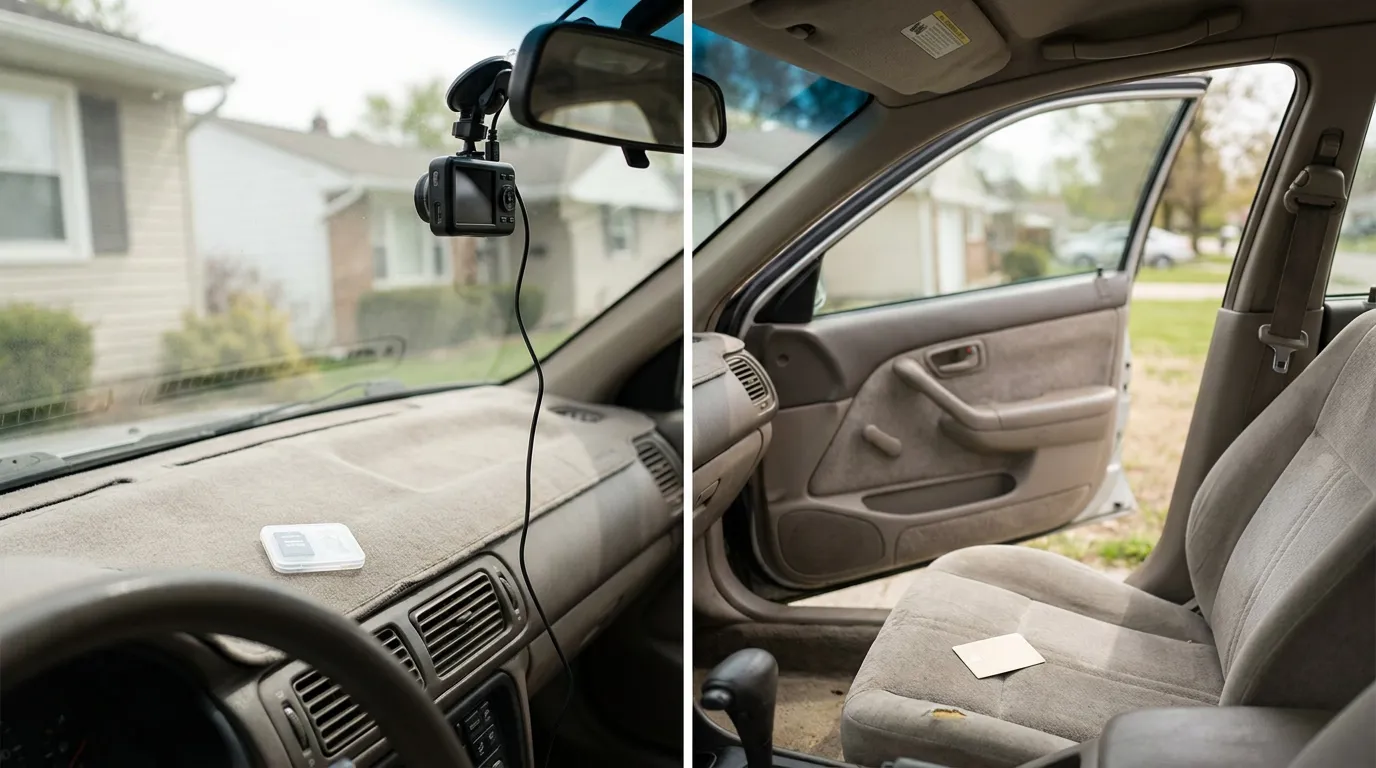
- Dashcam, doorbell, business, or traffic camera video showing the maneuver
- A prompt police report documenting your description of the vehicle and driver
- Physical evidence at the scene, such as tire marks, debris, or roadway gouges
- Vehicle damage patterns consistent with an evasive swerve or sudden braking
💡 Pro Tip: If you are physically able, ask bystanders for their names and phone numbers before they leave. A neutral witness is often the difference between a paid claim and a denied one.
Steps That Protect a Miss and Run Claim in Dayton
Act quickly and create a paper trail. Reporting the crash to law enforcement promptly, describing the phantom vehicle in detail, and notifying your own insurer without delay may help establish that the unidentified vehicle was real rather than reconstructed after the fact. Delay tends to invite skepticism, and some policies condition coverage on notice or on reporting to police within a stated period.
Medical documentation generally carries equal weight. Seeking prompt evaluation at a Dayton-area emergency department or urgent care, following through with recommended treatment, and keeping records of missed work and lost earnings can help build the damages side of the claim. Gaps in treatment are frequently used to argue that injuries were minor or unrelated.
Proving Negligence Without a Named Defendant
You generally still have to show the phantom driver was negligent, because UM coverage typically responds only to damages the insured would have been legally entitled to recover from the unidentified motorist. That means establishing duty, breach, causation, and damages just as you would against an identified motorist, only without a defendant to depose. Reconstruction analysis, scene evidence, and witness accounts often carry the burden that a defendant’s own admissions might otherwise supply.
| Claim Feature | Identified At-Fault Driver | Phantom Vehicle Claim |
|---|---|---|
| Who pays | The other driver’s liability carrier | Your own UM coverage |
| Proof of negligence | Required | Required |
| Corroborating evidence | Helpful | May be required by policy |
| Adverse party | A third-party insurer | Your own insurer |
Common Challenges in an Ohio Phantom Driver Crash
Carriers frequently dispute whether the phantom vehicle existed. Because you may be making a claim against your own insurer, the relationship can become adversarial even though you have paid premiums for years, though the carrier still owes you contractual duties and a duty of good faith in handling the claim. Recorded statements taken early, before you understand the extent of your injuries, may be used to narrow the claim later.
Policy deadlines and notice provisions deserve careful attention. Uninsured motorist claims are contractual, so they can involve notice requirements and suit-limitation clauses that operate separately from the two-year statute of limitations for bodily injury actions in O.R.C. 2305.10. Under O.R.C. 3937.18(H), Ohio permits UM policies to include a contractual limitation requiring claims be brought within three years from the date of the accident. This three-year period is the maximum limitations period the statute expressly authorizes insurers to impose contractually; it does not function as a minimum floor, and some insurers have attempted to impose shorter contractual periods, which Ohio’s file-and-use regulatory framework may permit subject to Ohio Department of Insurance review. Because Ohio’s personal injury statute of limitations under O.R.C. 2305.10 is only two years, filing within that period is generally advisable, but the applicable contractual deadline in your specific policy should be reviewed carefully. Reviewing the actual policy language early is one of the more practical steps an injured person can take.
💡 Pro Tip: Request a certified copy of your full policy, including the declarations page and all endorsements, rather than relying on a summary from a claims representative.
Frequently Asked Questions
1. Do I need physical contact with the other vehicle to recover UM benefits?
Not necessarily. After Girgis v. State Farm Mutual Automobile Insurance Co. in 1996, Ohio courts have generally declined to enforce strict physical contact requirements, and the legislature instead authorized insurers to require independent corroborating evidence. Whether any such provision applies depends on your policy’s wording and current Ohio law.
2. Will filing a phantom vehicle claim raise my rates?
That question is generally governed by your insurer’s underwriting and rating practices rather than by a fixed statutory rule. Many drivers are reluctant to file for this reason, but UM coverage generally exists for situations where no other source of recovery is available.
3. What if no one else saw the crash?
A claim without independent witnesses is harder but not automatically hopeless. Video footage, physical evidence, and prompt reporting may satisfy a corroboration requirement in some circumstances, though results depend on the specific facts and policy terms.
4. How soon should I report the incident?
As soon as reasonably possible. Prompt reporting to police and to your carrier may strengthen credibility and help satisfy policy notice conditions, which may be enforced independently of any statutory deadline.
5. Can passengers make a claim?
In many cases, passengers may have access to UM benefits for an unidentified vehicle in Ohio through the vehicle’s policy or their own household coverage, if such coverage was purchased. These questions generally turn on the definitions, household and other-owned-vehicle exclusions, and priority-of-coverage terms in the applicable policies.
Where Dayton Crash Victims Go From Here
A phantom vehicle claim generally asks you to show a negligent driver existed without ever naming that driver, then satisfy corroboration conditions your own insurer may impose. Ohio’s statutory scheme in O.R.C. 3937.18, read alongside the state’s financial responsibility requirements in Chapter 4509, may give injured people a path forward when UM coverage is in place. Success generally depends on early evidence preservation, consistent medical treatment, and careful attention to the policy language. If you want to keep reading about Ohio crash claims, our Dayton injury law insights cover related topics.
No two phantom vehicle cases look alike, and the difference between a denied claim and a fair recovery often comes down to what was documented in the first days. A Dayton UM claim lawyer at Horenstein Nicholson & Blumenthal can review your policy, evaluate the available corroboration, and handle communications with the carrier. Reach the firm at (937) 224-7200, start your free consultation, or learn more about the firm’s approach on the Horenstein Nicholson & Blumenthal website.
Disclaimer: This content is for informational purposes only and is not legal advice. Every case is unique, and results may vary. Consult an attorney about your specific circumstances.
Related Posts

Can Your Ohio Uninsured Motorist Policy Shorten Your Time to File a Claim?
Ohio UM Policy Deadlines Can Arrive Sooner Than You Think Key Takeaways: Yes, your Ohio uninsured motorist policy can set its own claim deadline. Under ORC § 3937.18(H), an insurer may require UM/UIM claims or lawsuits to be brought within three years after the accident. This clock generally runs separately from the two-year statute of limitations for suing the at-fault driver under ORC § 2305.10(A)….
READ MORE
What Are the Trucker Hours of Service Rules in an Ohio Crash Case?
How Federal Driving Limits Shape Your Ohio Truck Crash Claim Key Takeaways: Federal hours of service rules generally limit property-carrying truckers to 11 hours of driving after 10 consecutive hours off duty, a 14-hour on-duty window, a 30-minute break after 8 cumulative hours of driving, and a weekly 60/70-hour on-duty ceiling. Ohio regulates motor carrier safety through PUCO under Ohio Rev. Code § 4905.81 and…
READ MORE
What Is a Driver Qualification File in a Dayton Truck Accident Case?
The Paper Trail Behind Every Commercial Truck Driver Key Takeaways: A driver qualification file is the federally mandated personnel and safety record that every motor carrier must keep for each driver it employs under 49 CFR Part 391, Subpart F, § 391.51. It typically contains the employment application, motor vehicle record inquiries, a road test certificate or equivalent, evidence of medical certification, and annual reviews…
READ MORE
What Is a Child Support Lien on a Dayton Car Accident Settlement?
How Past-Due Support Can Follow Your Crash Recovery in Montgomery County Key Takeaways: A child support lien on a Dayton car accident settlement is a legal claim letting a child support obligee or enforcement agency reach money owed to a parent behind on support payments. Ohio Revised Code Chapter 3123 supplies this lien authority statewide, so it applies the same way in Montgomery County as…
READ MORE
Why FMCSA’s 6-Month Logbook Rule Threatens Your Dayton Truck Crash Case
The Six-Month Clock That Starts Ticking the Moment a Semi Hits Your Car Key Takeaways: Federal law under 49 CFR 395.8(k)(1) requires motor carriers to retain records of duty status and supporting documents for at least six months from the date of receipt, while Ohio generally gives injury victims two years to file suit under R.C. 2305.10(A). That mismatch means logs proving a fatigued driver…
READ MORE
What Triggers FMCSA Post-Accident Drug Testing in a Dayton Truck Crash?
Why a Truck Driver’s Drug Test Can Make or Break Your Crash Claim Key Takeaways: Federal law under 49 CFR § 382.303 requires a motor carrier to test its driver after a crash in three situations: a human fatality, a tow-away due to disabling damage where the driver is cited within 8 hours for alcohol testing or within 32 hours for controlled substances testing, or…
READ MORE
What Is MedPay Coverage in a Dayton, Ohio Car Accident Claim?
Understanding the Medical Bill Coverage Hiding in Your Ohio Auto Policy Key Takeaways: MedPay, or Medical Payments coverage, is an optional first-party benefit in an Ohio auto policy that helps pay medical expenses for you and your passengers after a Dayton crash, generally regardless of fault. Because Ohio is a fault-based state, MedPay supplements rather than replaces the liability claim against the negligent driver. Limits…
READ MOREGet HNB to Help You
What our client has to say

Laurie Ruscillo
in Google Reviews
“During a very difficult time, there was compassion and a truly dedicated effort from the staff for a favorable outcome with a disability claim from the Social Security Administration.”
Related Posts
Can Your Ohio Uninsured Motorist Policy Shorten Your Time to File a Claim?
Ohio UM Policy Deadlines Can Arrive Sooner Than You Think Key Takeaways: Yes, your Ohio uninsured motorist policy can set its own claim deadline. Under ORC § 3937.18(H), an insurer may require UM/UIM claims or lawsuits to be brought within three years after the accident. This clock generally runs separately from the two-year statute of limitations for suing the at-fault driver under ORC § 2305.10(A)….
READ MORE What Are the Trucker Hours of Service Rules in an Ohio Crash Case?
How Federal Driving Limits Shape Your Ohio Truck Crash Claim Key Takeaways: Federal hours of service rules generally limit property-carrying truckers to 11 hours of driving after 10 consecutive hours off duty, a 14-hour on-duty window, a 30-minute break after 8 cumulative hours of driving, and a weekly 60/70-hour on-duty ceiling. Ohio regulates motor carrier safety through PUCO under Ohio Rev. Code § 4905.81 and…
READ MORE What Is a Driver Qualification File in a Dayton Truck Accident Case?
The Paper Trail Behind Every Commercial Truck Driver Key Takeaways: A driver qualification file is the federally mandated personnel and safety record that every motor carrier must keep for each driver it employs under 49 CFR Part 391, Subpart F, § 391.51. It typically contains the employment application, motor vehicle record inquiries, a road test certificate or equivalent, evidence of medical certification, and annual reviews…
READ MORE What Is a Child Support Lien on a Dayton Car Accident Settlement?
How Past-Due Support Can Follow Your Crash Recovery in Montgomery County Key Takeaways: A child support lien on a Dayton car accident settlement is a legal claim letting a child support obligee or enforcement agency reach money owed to a parent behind on support payments. Ohio Revised Code Chapter 3123 supplies this lien authority statewide, so it applies the same way in Montgomery County as…
READ MORE Why FMCSA’s 6-Month Logbook Rule Threatens Your Dayton Truck Crash Case
The Six-Month Clock That Starts Ticking the Moment a Semi Hits Your Car Key Takeaways: Federal law under 49 CFR 395.8(k)(1) requires motor carriers to retain records of duty status and supporting documents for at least six months from the date of receipt, while Ohio generally gives injury victims two years to file suit under R.C. 2305.10(A). That mismatch means logs proving a fatigued driver…
READ MORE What Triggers FMCSA Post-Accident Drug Testing in a Dayton Truck Crash?
Why a Truck Driver’s Drug Test Can Make or Break Your Crash Claim Key Takeaways: Federal law under 49 CFR § 382.303 requires a motor carrier to test its driver after a crash in three situations: a human fatality, a tow-away due to disabling damage where the driver is cited within 8 hours for alcohol testing or within 32 hours for controlled substances testing, or…
READ MORE What Is MedPay Coverage in a Dayton, Ohio Car Accident Claim?
Understanding the Medical Bill Coverage Hiding in Your Ohio Auto Policy Key Takeaways: MedPay, or Medical Payments coverage, is an optional first-party benefit in an Ohio auto policy that helps pay medical expenses for you and your passengers after a Dayton crash, generally regardless of fault. Because Ohio is a fault-based state, MedPay supplements rather than replaces the liability claim against the negligent driver. Limits…
READ MORE


Phone

Hours
AVAILABLE 24/7
OFFICES
Dayton, OH
220 E. Monument Ave.
Suite 305
Dayton, OH 45402