

What Triggers FMCSA Post-Accident Drug Testing in a Dayton Truck Crash?
Why a Truck Driver’s Drug Test Can Make or Break Your Crash Claim
Key Takeaways: Federal law under 49 CFR § 382.303 requires a motor carrier to test its driver after a crash in three situations: a human fatality, a tow-away due to disabling damage where the driver is cited within 8 hours for alcohol testing or within 32 hours for controlled substances testing, or an injury requiring immediate treatment away from the scene where the driver is cited within 8 hours for alcohol testing or within 32 hours for controlled substances testing. Because two of the three triggers depend on a citation, the responding officer’s roadside decision often determines whether toxicology evidence is ever created. Testing deadlines are strict: alcohol testing should be attempted within 2 hours and abandoned after 8 hours, controlled substances testing must occur within 32 hours, and carriers must document any missed window. Ohio Rev. Code Chapter 4506 works alongside the federal framework, setting a 0.04 BAC disqualification threshold for commercial drivers and mandating disqualification for refusing a required chemical test. Even when a test is negative, late, or never performed, claims may still proceed on hours-of-service, maintenance, cargo securement, or negligent hiring theories. Acting quickly to preserve test records, driver qualification files, ELD data, and black box downloads often separates a well-documented claim from a difficult one.
Federal law does not leave post-crash testing to the trucking company’s discretion. Under 49 CFR § 382.303, a motor carrier must test its driver when a crash involves a fatality, or when the driver is cited for a moving violation combined with either a tow-away from disabling damage or an injury requiring immediate medical treatment away from the scene. In a Dayton truck crash, these objective triggers often determine whether toxicology evidence ever gets created, and once the testing windows close, that evidence may be gone permanently.
If you or a loved one was hurt by a commercial truck in the Miami Valley, the team at Horenstein Nicholson & Blumenthal can move quickly to preserve testing records and carrier compliance files. Call (937) 224-7200 or contact us now to discuss your options with a Dayton truck accident lawyer.
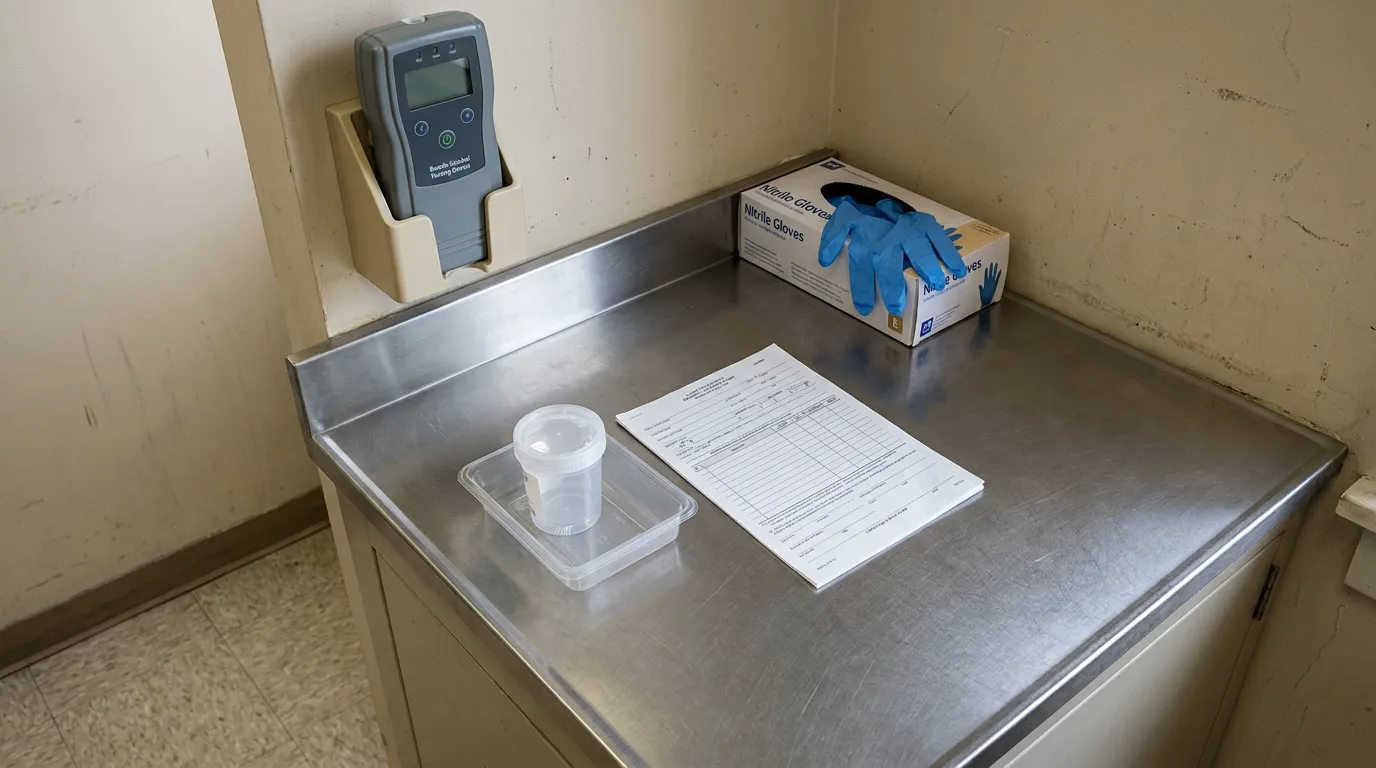
The Three Federal Triggers for Post-Accident Testing
FMCSA rules identify three scenarios requiring a carrier to test its driver after a crash. The first: testing is required if the accident involved a human fatality, regardless of fault or citation. The second and third triggers hinge on a citation issued to the commercial driver.
The second applies when a vehicle must be towed for disabling damage and the driver is cited for a moving violation within 8 hours for alcohol testing to be mandatory, or within 32 hours for controlled substances testing to be mandatory. The third applies when the crash caused a bodily injury requiring immediate treatment away from the scene and the driver was cited within 8 hours for alcohol testing to be mandatory, or within 32 hours for controlled substances testing to be mandatory. See the FMCSA post-accident testing rules for details.
| Crash Circumstance | Citation Required? | Testing Required? |
|---|---|---|
| Human fatality | No | Yes |
| Tow-away due to disabling damage | Yes | Yes, if cited |
| Injury treated away from scene | Yes | Yes, if cited |
| Property damage only, no citation | N/A | Generally not required |
This framework explains why the citation decision at the scene carries so much weight outside fatality cases. If the officer doesn’t issue a moving violation citation within the applicable window, the federal testing obligation may never attach, even in a serious injury collision. That roadside decision can shape the evidence available months later in litigation.
How Truck Driver Post Accident Drug Testing Deadlines Work
Timing is the second half of the rule, and it is unforgiving. Alcohol testing should be conducted within 2 hours; if not, the carrier must document why, and attempts must cease after 8 hours. Controlled substances testing must occur within 32 hours. Carriers must have policies ensuring drivers remain available for testing under 49 CFR Part 382.
When a carrier misses these deadlines, it must prepare and maintain a record explaining why. A late test, incomplete chain of custody, or missing explanation can itself become evidence of how seriously a company takes its safety obligations. Plaintiff counsel often examines not only the test result but the carrier’s entire testing policy, supervisor training, and prior testing history.
Why the Clock Matters More Than the Result
Impairing substances metabolize, and delay degrades sample reliability. A blood alcohol level detectable at the scene may be undetectable eight hours later. When testing is delayed or never performed, your attorney may need to reconstruct impairment circumstantially through witness statements, dash camera footage, receipts, cell phone records, and electronic logging device data.
💡 Pro Tip: Ask that a spoliation letter be sent to the carrier within days of the crash, demanding preservation of post-accident test results, refusal documentation, driver qualification files, and black box data.
Where Ohio Law Reinforces the Federal Standard
Ohio does not run a separate testing regime for commercial drivers; it interlocks with the federal one. The Ohio commercial driver’s license law in Ohio Rev. Code Chapter 4506 adopts and cross-references federal commercial driver qualification and disqualification standards. This linkage allows a single crash to generate both federal compliance consequences and state licensing consequences.
Chapter 4506 also sets the alcohol threshold governing commercial operators. Ohio law generally prohibits operating a commercial motor vehicle with a BAC of 0.04 or higher, matching the federal standard and sitting well below the 0.08 threshold for noncommercial drivers. A violation doesn’t by itself establish civil liability, but it may support disqualification and be relevant to a negligence theory.
Refusing the Test Is Not a Safe Harbor
A driver who refuses testing does not escape consequence under Ohio law. Chapter 4506 provides for disqualification of a CDL holder who refuses a required chemical test, mirroring the federal rule treating refusal much like a positive test. In civil litigation, a documented refusal may be considered alongside other evidence, though its admissibility and weight are fact-dependent.
Building a Case When the Test Never Happened
Many injured people assume a negative or missing test ends the inquiry. It does not. Drug and alcohol impairment is only one of several regulatory theories in a trucking case. Hours-of-service violations, inadequate maintenance, improper cargo securement, and negligent hiring or supervision may each independently support a claim, depending on the facts.
Preserving the broader record early is generally the most valuable step a claimant can take. These categories of evidence tend to be time-sensitive and are commonly pursued in the first weeks after a collision:
- Post-accident test results, refusal documentation, and chain-of-custody records
- Electronic logging device and engine control module (black box) downloads
- Driver qualification file, prior testing history, and training records
- Dispatch records, bills of lading, and communications about delivery timing
- Vehicle inspection, repair, and maintenance histories
Because carriers and insurers often begin investigating within hours, injured parties may be at a practical disadvantage without counsel. Retaining an Ohio truck accident attorney early can help ensure preservation demands reach the right parties before routine document destruction takes effect. Outcomes always depend on the specific facts, and no single piece of evidence guarantees a particular result.
What to Do in the Days After a Dayton Truck Crash
Your immediate priority should be medical care, followed closely by documentation. Seek treatment even if symptoms seem manageable, contemporaneous medical records help connect your injuries to the collision. Request a copy of the crash report once available, and note whether any citation was issued to the commercial driver.
Avoid giving a recorded statement to the carrier’s insurer before speaking with counsel. Adjusters may ask questions designed to establish comparative fault. Under Ohio’s modified comparative negligence rule, an injured person generally may recover only if their share of fault is not greater than 50%, and any recovery is reduced proportionally, so statements that shift blame can meaningfully reduce or eliminate a potential recovery.
💡 Pro Tip: Photograph the tow trucks, vehicle damage, and any placards or company markings on the tractor and trailer. Tow-away evidence can help establish that a federal testing trigger was satisfied.
Questions Worth Asking Early
A short list of targeted questions can reveal whether the carrier followed its obligations. Did the company have a written post-accident testing policy? Was the driver tested, and within what timeframe? If not, what explanation was documented? For more background, our truck accident legal resources cover related regulatory topics.
Frequently Asked Questions
1. Does every truck crash require a drug test?
No. Federal testing is generally required for a fatality, or when the driver is cited for a moving violation and either a vehicle was towed for disabling damage or someone needed immediate treatment away from the scene. Property-damage-only crashes without a citation generally don’t trigger the requirement, though a carrier may test under its own policy or reasonable suspicion.
2. How long does the carrier have to test the driver?
Alcohol testing should occur within 2 hours and cannot be administered after 8 hours; controlled substances testing must occur within 32 hours. Carriers that miss these windows must document the reason.
3. Can I still recover compensation if the driver tested negative?
Possibly. Impairment is only one potential theory of liability. Hours-of-service violations, maintenance failures, cargo securement problems, and negligent supervision may each independently support a claim, subject to the facts.
4. What happens if the driver refused the test?
Ohio Rev. Code Chapter 4506 provides for disqualification of a CDL holder who refuses a required chemical test, and federal rules treat a refusal as a violation too. A refusal may also be relevant in a civil case, though its admissibility and weight depend on the court and circumstances.
5. Who decides whether the truck driver gets cited?
The responding law enforcement officer typically makes that determination at or near the scene. Because a citation drives two of the three federal testing triggers, this decision can significantly affect what testing evidence later exists.
The Bottom Line on Post-Accident Testing Evidence
Post-accident testing triggers are objective, but not automatic in every crash. A fatality alone requires testing; injury and tow-away scenarios require an accompanying citation within the applicable window. Combined with the tight alcohol and 32-hour controlled substances windows, critical toxicology evidence in a Dayton truck crash can disappear before an injured person has finished initial medical treatment. Acting quickly to demand preservation of testing records, driver files, and electronic data often separates a well-documented claim from a difficult one.
If a commercial truck has seriously injured you or taken the life of someone you love, Horenstein Nicholson & Blumenthal is ready to investigate whether the carrier met its federal testing obligations. Call (937) 224-7200 or reach out to our team today to schedule a consultation.
Disclaimer: This content is for informational purposes only and is not legal advice. Every case is unique, and results may vary. Consult an attorney about your specific circumstances.
Related Posts

Can Your Ohio Uninsured Motorist Policy Shorten Your Time to File a Claim?
Ohio UM Policy Deadlines Can Arrive Sooner Than You Think Key Takeaways: Yes, your Ohio uninsured motorist policy can set its own claim deadline. Under ORC § 3937.18(H), an insurer may require UM/UIM claims or lawsuits to be brought within three years after the accident. This clock generally runs separately from the two-year statute of limitations for suing the at-fault driver under ORC § 2305.10(A)….
READ MORE
What Are the Trucker Hours of Service Rules in an Ohio Crash Case?
How Federal Driving Limits Shape Your Ohio Truck Crash Claim Key Takeaways: Federal hours of service rules generally limit property-carrying truckers to 11 hours of driving after 10 consecutive hours off duty, a 14-hour on-duty window, a 30-minute break after 8 cumulative hours of driving, and a weekly 60/70-hour on-duty ceiling. Ohio regulates motor carrier safety through PUCO under Ohio Rev. Code § 4905.81 and…
READ MORE
What Is a Driver Qualification File in a Dayton Truck Accident Case?
The Paper Trail Behind Every Commercial Truck Driver Key Takeaways: A driver qualification file is the federally mandated personnel and safety record that every motor carrier must keep for each driver it employs under 49 CFR Part 391, Subpart F, § 391.51. It typically contains the employment application, motor vehicle record inquiries, a road test certificate or equivalent, evidence of medical certification, and annual reviews…
READ MORE
What Is a Child Support Lien on a Dayton Car Accident Settlement?
How Past-Due Support Can Follow Your Crash Recovery in Montgomery County Key Takeaways: A child support lien on a Dayton car accident settlement is a legal claim letting a child support obligee or enforcement agency reach money owed to a parent behind on support payments. Ohio Revised Code Chapter 3123 supplies this lien authority statewide, so it applies the same way in Montgomery County as…
READ MORE
Why FMCSA’s 6-Month Logbook Rule Threatens Your Dayton Truck Crash Case
The Six-Month Clock That Starts Ticking the Moment a Semi Hits Your Car Key Takeaways: Federal law under 49 CFR 395.8(k)(1) requires motor carriers to retain records of duty status and supporting documents for at least six months from the date of receipt, while Ohio generally gives injury victims two years to file suit under R.C. 2305.10(A). That mismatch means logs proving a fatigued driver…
READ MORE
What Is a Phantom Vehicle Uninsured Motorist Claim in Dayton, Ohio?
When the Driver Who Caused Your Crash Disappears Key Takeaways: A phantom vehicle uninsured motorist claim in Dayton, Ohio generally arises when an unidentified driver causes a crash, often without ever touching your vehicle, leaving you with no at-fault party to sue. Under O.R.C. 3937.18, Ohio generally treats an unidentified driver like an uninsured one, which may allow you to seek benefits through your own…
READ MORE
What Is MedPay Coverage in a Dayton, Ohio Car Accident Claim?
Understanding the Medical Bill Coverage Hiding in Your Ohio Auto Policy Key Takeaways: MedPay, or Medical Payments coverage, is an optional first-party benefit in an Ohio auto policy that helps pay medical expenses for you and your passengers after a Dayton crash, generally regardless of fault. Because Ohio is a fault-based state, MedPay supplements rather than replaces the liability claim against the negligent driver. Limits…
READ MOREGet HNB to Help You
What our client has to say

Laurie Ruscillo
in Google Reviews
“During a very difficult time, there was compassion and a truly dedicated effort from the staff for a favorable outcome with a disability claim from the Social Security Administration.”
Related Posts
Can Your Ohio Uninsured Motorist Policy Shorten Your Time to File a Claim?
Ohio UM Policy Deadlines Can Arrive Sooner Than You Think Key Takeaways: Yes, your Ohio uninsured motorist policy can set its own claim deadline. Under ORC § 3937.18(H), an insurer may require UM/UIM claims or lawsuits to be brought within three years after the accident. This clock generally runs separately from the two-year statute of limitations for suing the at-fault driver under ORC § 2305.10(A)….
READ MORE What Are the Trucker Hours of Service Rules in an Ohio Crash Case?
How Federal Driving Limits Shape Your Ohio Truck Crash Claim Key Takeaways: Federal hours of service rules generally limit property-carrying truckers to 11 hours of driving after 10 consecutive hours off duty, a 14-hour on-duty window, a 30-minute break after 8 cumulative hours of driving, and a weekly 60/70-hour on-duty ceiling. Ohio regulates motor carrier safety through PUCO under Ohio Rev. Code § 4905.81 and…
READ MORE What Is a Driver Qualification File in a Dayton Truck Accident Case?
The Paper Trail Behind Every Commercial Truck Driver Key Takeaways: A driver qualification file is the federally mandated personnel and safety record that every motor carrier must keep for each driver it employs under 49 CFR Part 391, Subpart F, § 391.51. It typically contains the employment application, motor vehicle record inquiries, a road test certificate or equivalent, evidence of medical certification, and annual reviews…
READ MORE What Is a Child Support Lien on a Dayton Car Accident Settlement?
How Past-Due Support Can Follow Your Crash Recovery in Montgomery County Key Takeaways: A child support lien on a Dayton car accident settlement is a legal claim letting a child support obligee or enforcement agency reach money owed to a parent behind on support payments. Ohio Revised Code Chapter 3123 supplies this lien authority statewide, so it applies the same way in Montgomery County as…
READ MORE Why FMCSA’s 6-Month Logbook Rule Threatens Your Dayton Truck Crash Case
The Six-Month Clock That Starts Ticking the Moment a Semi Hits Your Car Key Takeaways: Federal law under 49 CFR 395.8(k)(1) requires motor carriers to retain records of duty status and supporting documents for at least six months from the date of receipt, while Ohio generally gives injury victims two years to file suit under R.C. 2305.10(A). That mismatch means logs proving a fatigued driver…
READ MORE What Is a Phantom Vehicle Uninsured Motorist Claim in Dayton, Ohio?
When the Driver Who Caused Your Crash Disappears Key Takeaways: A phantom vehicle uninsured motorist claim in Dayton, Ohio generally arises when an unidentified driver causes a crash, often without ever touching your vehicle, leaving you with no at-fault party to sue. Under O.R.C. 3937.18, Ohio generally treats an unidentified driver like an uninsured one, which may allow you to seek benefits through your own…
READ MORE What Is MedPay Coverage in a Dayton, Ohio Car Accident Claim?
Understanding the Medical Bill Coverage Hiding in Your Ohio Auto Policy Key Takeaways: MedPay, or Medical Payments coverage, is an optional first-party benefit in an Ohio auto policy that helps pay medical expenses for you and your passengers after a Dayton crash, generally regardless of fault. Because Ohio is a fault-based state, MedPay supplements rather than replaces the liability claim against the negligent driver. Limits…
READ MORE


Phone

Hours
AVAILABLE 24/7
OFFICES
Dayton, OH
220 E. Monument Ave.
Suite 305
Dayton, OH 45402