

What Is a Subrogation Claim After a Dayton Car Accident?
Understanding How Insurers Recover Money After an Ohio Crash
Key Takeaways: A subrogation claim allows an insurer, auto carrier, or the Ohio Bureau of Workers’ Compensation to recover money paid on your behalf from any settlement with the at-fault driver. Multiple entities can assert these rights, including private health insurers, self-funded employer plans, government payers, and auto carriers paying medical or underinsured motorist benefits. Ohio law limits recovery through the made-whole doctrine, constitutional protections against double recovery, and statutory restrictions on non-recoverable expenses. To fight a claim, challenge the amount, legal basis, or proportional share demanded. Either party can file a Chapter 2721 declaratory judgment action to resolve disputes. The two-year personal injury statute of limitations is critical to preserving both your recovery and negotiating leverage.
A subrogation claim is the legal mechanism that lets an insurer or other payer step into your shoes to recover money it paid on your behalf from the at-fault driver. When you are injured in a Dayton car accident, your health insurer, auto carrier, or the Ohio Bureau of Workers’ Compensation may pay your medical bills or wage loss up front, then assert a right to be repaid from any settlement you collect from the negligent driver. Understanding subrogation early can protect the share of your recovery you actually keep.
If you are facing reimbursement demands and wondering what is a subrogation claim and how do I fight it, the team at Horenstein Nicholson & Blumenthal is ready to help. Call our office at (937) 224-7200 or reach out through our secure contact form.
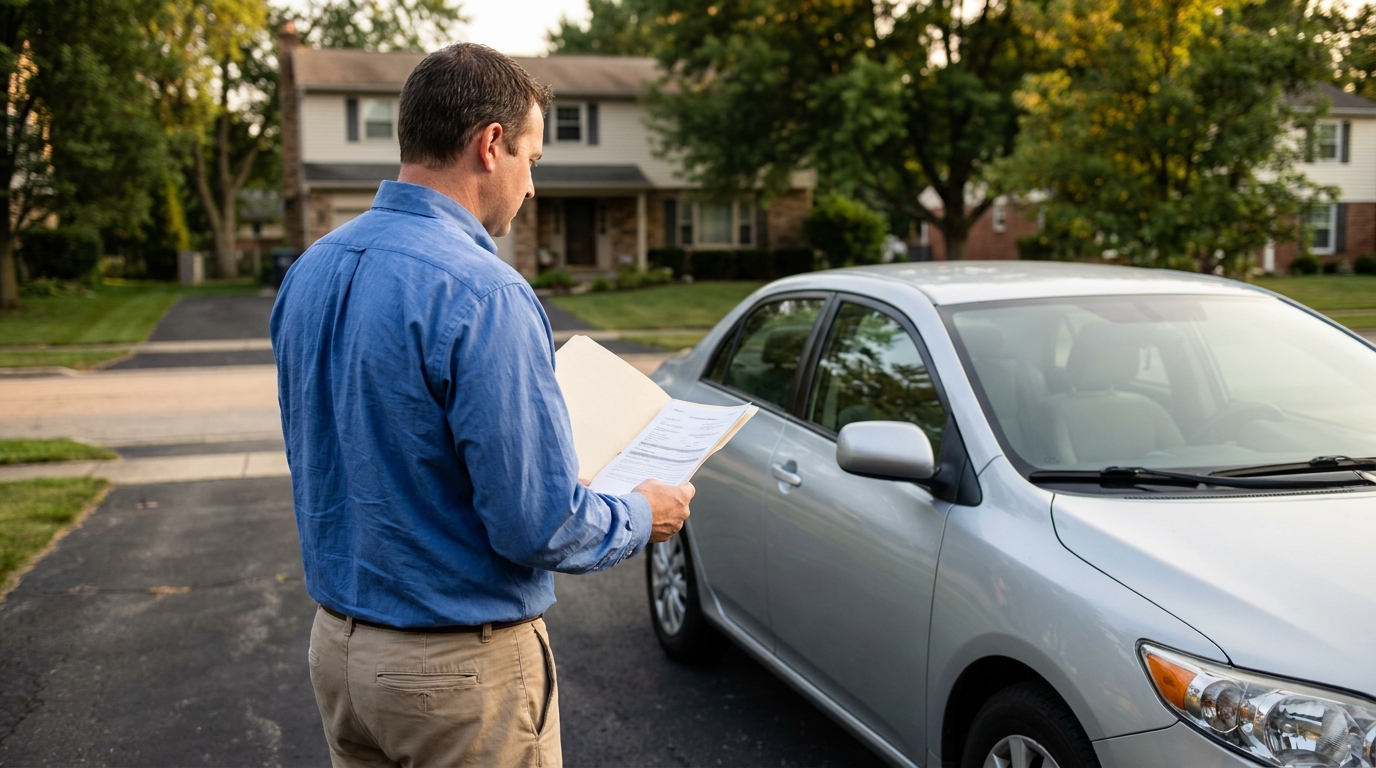
What Subrogation Means in a Dayton Car Accident
Subrogation gives a payer the right to recover costs from the party who caused your injury, but only under defined conditions. The Ohio Bureau of Workers’ Compensation defines subrogation as how it or a self-insuring employer collects medical and compensation costs when a third party causes the workers’ compensation injury. A car crash can trigger overlapping reimbursement rights when it’s also work-related.
The right to subrogation is created by statute and common law, depending on who seeks repayment. Under Ohio’s workers’ compensation framework, R.C. 4123.931(A) creates a right of recovery in favor of a statutory subrogee against a third party. R.C. 4123.93(D) defines “subrogation interest” broadly to include past, present, and estimated future payments of compensation, medical benefits, rehabilitation costs, death benefits, and other costs paid to or on behalf of the claimant.
💡 Pro Tip: Keep every Explanation of Benefits statement and lien letter you receive after a crash. These documents reveal exactly who is claiming a subrogation interest and how much they say they paid.
Who Can Assert Subrogation Rights in Ohio
Many different entities may claim a right to be repaid, not just the obvious auto insurer. Under Section 2323.44(A)(5), a subrogee means an insurance company doing business in this state, a self-funded plan providing health, sickness, or disability benefits, a health care provider-sponsored organization, or any person or entity that claims a right of subrogation by contract or common law. This includes private health plans, self-funded employer plans, and government payers.
The type of recovery that subrogation reaches is also defined by statute. Under Section 2323.44(A)(3), recovery means the amount obtained from a third party in a tort action or for a claim in connection with uninsured or underinsured motorist coverage. Even money you collect from your own underinsured motorist policy may be subject to reimbursement.
- Private health insurers seeking repayment of medical bills paid after the crash
- Self-funded employer health plans, which may be governed by federal ERISA law
- The Ohio Bureau of Workers’ Compensation, when the crash happened during employment
- Auto carriers paying medical payments or underinsured motorist benefits
The Limits That Protect Injured Drivers
Ohio law does not give subrogees unlimited rights to your settlement, and several doctrines exist to keep recovery fair. The made-whole concept is built into the statute through a proportional-sharing rule. Under Section 2323.44(B)(1), if you recover less than the full value due to comparative negligence, limited insurance, or other causes, the subrogee’s claim is diminished in the same proportion. This can meaningfully lower what you owe back when your damages exceed available coverage. This protection does not override federal law, so self-funded ERISA plans may enforce their own terms, and the Ohio Bureau of Workers’ Compensation collects under its own statutory formula in R.C. 4123.931.
Constitutional limits also restrain how much a subrogee may take. Ohio courts have recognized that subrogation exists to prevent double recovery, not to give a payer a windfall. Drawing on Holeton v. Crouse Cartage Co., courts have held that due process permits deductions for collateral benefits only to the extent that the loss compensated is actually included in the award. A payer generally cannot recover for losses that were never part of your settlement.
A recent Ohio Supreme Court decision further narrowed what a statutory subrogee may collect. The Court held that the BWC’s subrogation rights do not extend to expenses it incurred for things like medical review, expenses that were not recoverable by the claimant from the third-party tortfeasor. You can review disputes that shape this area through the University of Akron’s collection of leading Ohio insurance cases.
💡 Pro Tip: Before signing any settlement release, confirm in writing whether subrogation has been resolved. Settling without addressing a known lien can leave you personally responsible for reimbursement.
What Is a Subrogation Claim and How Do I Fight It
You fight a subrogation claim by challenging the amount, the legal basis, or the proportional share the payer is demanding. Start by verifying that the claimed amount reflects only payments actually made for losses included in your recovery. Because the made-whole doctrine can reduce a subrogee’s share when you recover less than full value, documenting your total damages and available insurance limits is often central to reducing a demand.
When parties cannot agree on how money should be split, Ohio law provides a formal path. Under Section 2323.44(B)(2), either party may file an action under Chapter 2721 of the Revised Code to resolve distribution of the recovery. A declaratory judgment action asks a court to decide the proper allocation. You can read the full framework on Ohio’s official subrogation distribution statute.
Outcomes are highly fact-dependent, so general rules are not guarantees. Courts may consider comparative fault allocation, available coverage size, categories of damages awarded, and which losses the payer actually covered. Thorough documentation gives you the strongest position to negotiate a reduction or contest an inflated demand. To understand your rights in depth, speak with a Dayton car accident attorney who handles these disputes.
| Issue in Dispute | What It May Affect |
|---|---|
| Made-whole reduction | Lowers the subrogee’s share when you recover less than full value |
| Recoverable expenses | Limits reimbursement to losses included in your award |
| Distribution disagreement | May be resolved through a Chapter 2721 court action |
💡 Pro Tip: Ask your payer for an itemized ledger of every charge. Disputing line items that were not recoverable from the at-fault driver can shrink the total demand.
Deadlines That Can Affect Your Claim
The timeline for the underlying injury case matters because subrogation rights generally ride on your claim against the at-fault driver. Under Ohio’s statute of limitations for personal injury, an action for bodily injury or injuring personal property must be brought within two years after the cause of action accrues. The clock usually starts on the crash date, because a cause of action accrues when the injury or loss to person or property occurs.
Exceptions to this deadline exist, but courts interpret them narrowly. Tolling or delayed accrual does not apply automatically. You can review the controlling text in Ohio’s two-year injury filing deadline, but don’t assume any extension applies without confirming it. Missing the civil deadline can jeopardize both your recovery and your leverage in subrogation negotiation.
💡 Pro Tip: Treat the two-year mark as a firm planning date, not a flexible one. Acting early preserves evidence, witness statements, and your bargaining position.
Frequently Asked Questions
-
Does every car accident in Dayton involve subrogation?
Not every case, but many do when a third party pays your bills. Whenever a health insurer, auto carrier, or workers’ compensation payer covers your losses, a reimbursement right may arise. The presence and size depend on your specific coverage and crash facts.
-
Can a subrogation claim take my entire settlement?
Generally no, because Ohio’s made-whole rule can reduce the subrogee’s share. When you recover less than full value, the subrogee’s claim is diminished proportionally, and constitutional limits prevent recovery for losses not included in your award. Plans governed by federal law, such as some self-funded ERISA plans, may follow different rules.
-
What happens if I disagree with the reimbursement amount?
You may dispute it, and Ohio provides a court process for unresolved conflicts. Either party may file a declaratory judgment action to have a court decide the proper split. Documenting your damages and coverage limits is often key to a successful challenge.
-
Is workers’ compensation subrogation different from health insurance subrogation?
Yes, because statutory subrogees follow specific Revised Code provisions. The Ohio Bureau of Workers’ Compensation operates under its own statutory framework and uses formal procedures to initiate recovery. Private health plan subrogation is often governed by plan terms and common law.
-
Should I handle a subrogation dispute on my own?
You can, but these claims involve overlapping statutes and fact-specific defenses. Reviewing recent case law and statutory limits often reveals grounds to reduce a demand. Reading more on our legal insights blog can help you understand your options before responding.
Protecting What You Recover After a Crash
Subrogation is a normal part of resolving a serious Dayton car accident, but it should never quietly erase the compensation you fought to obtain. Ohio law provides real protections, including proportional reduction under the made-whole doctrine, constitutional limits against double recovery, and a court process for distribution disputes. Knowing these subrogation rights in Ohio, gathering thorough documentation, and respecting the two-year filing deadline put you in a stronger position.
If reimbursement demands are threatening your recovery, the attorneys at Horenstein Nicholson & Blumenthal are prepared to review your case. Call (937) 224-7200 or send us a message through our online case review request to learn how Ohio subrogation law may apply to your situation.
Related Posts

How to Protect a Dayton Car Accident Claim From Adjuster Tactics
Why Dayton Drivers Lose Value on Otherwise Strong Claims Key Takeaways: Insurance adjusters minimize payouts using predictable tactics like delays, lowball offers, recorded statements, and inflated fault arguments. To protect a Dayton car accident claim, know what to do after a crash in Ohio before signing anything or giving a statement. Document the scene, seek prompt medical care, and preserve all evidence. Understand Ohio’s modified comparative…
READ MORE
Why Are Truck Accident Injuries More Severe Than Car Crash Injuries in Dayton?
The Physics and Law Behind Severe Truck Crash Injuries in the Miami Valley Key Takeaways: Truck accident injuries are far more severe than car crash injuries because commercial trucks weigh 20-30 times more than passenger vehicles, generating crash forces that smaller cars cannot absorb. Height differences create deadly underride risks, while longer stopping distances increase impact speeds. National data confirms occupants of smaller vehicles suffer the…
READ MORE
What Is Negligence Per Se in a Dayton Truck Accident Case?
Understanding How Traffic Violations Can Prove Fault After a Dayton Truck Crash Key Takeaways: Negligence per se lets an injured person establish a truck driver’s breach of duty by showing the driver violated a safety statute, replacing the usual “reasonable person” standard with an objective statutory one. In Dayton truck accident cases, this often involves violations of Ohio’s traffic laws under Chapter 4511, including speeding, reckless…
READ MORE
What Is Ohio’s OVI Law and How Does It Affect Dayton Crash Victims?
Understanding Ohio’s Impaired Driving Laws After a Dayton Crash Key Takeaways: Ohio’s OVI law, codified at R.C. 4511.19, prohibits operating any vehicle while under the influence of alcohol, drugs, or a combination, with per se limits of 0.08 percent BAC and a 0.17 percent high-test threshold. When an impaired driver causes a Dayton crash, the same conduct supporting criminal charges establishes breach of duty in a…
READ MORE
How to Request a Truck’s Black Box Data After a Dayton Crash
Why Electronic Truck Data Can Make or Break Your Claim Key Takeaways: Modern commercial trucks store electronic data from the Electronic Control Module (ECM) and Electronic Logging Device (ELD) that reveals speed, braking, engine load, and driver hours before a crash. To request truck black box data after a Dayton crash, you must act fast and send a formal spoliation letter to the carrier, as ECM…
READ MORE
What Is a Diminished Value Claim After a Dayton Car Accident?
Understanding Vehicle Value Loss After an Ohio Collision Key Takeaways: A diminished value claim recovers the market value your car loses after a collision, even when repairs restore it to like-new condition, because a recorded accident history reduces what buyers pay. In Ohio, this loss is property damage recoverable from the at-fault driver, supported by Falter v. City of Toledo and Rakich, which allow recovery of…
READ MORE
Can Cargo Loading Errors Cause a Truck Accident in Dayton?
Understanding How Improperly Loaded Cargo Triggers Dayton Truck Crashes Key Takeaways: Cargo loading errors frequently cause truck accidents in Dayton by shifting freight that destabilizes an 18-wheeler and triggers rollovers or jackknifes. Common failures include overloading, uneven weight distribution, inadequate securement, and raised center of gravity. Liability often extends beyond the driver to loading companies, motor carriers, third-party contractors, and equipment manufacturers under Ohio law. Proving…
READ MOREGet HNB to Help You
What our client has to say

Laurie Ruscillo
in Google Reviews
“During a very difficult time, there was compassion and a truly dedicated effort from the staff for a favorable outcome with a disability claim from the Social Security Administration.”
Related Posts
How to Protect a Dayton Car Accident Claim From Adjuster Tactics
Why Dayton Drivers Lose Value on Otherwise Strong Claims Key Takeaways: Insurance adjusters minimize payouts using predictable tactics like delays, lowball offers, recorded statements, and inflated fault arguments. To protect a Dayton car accident claim, know what to do after a crash in Ohio before signing anything or giving a statement. Document the scene, seek prompt medical care, and preserve all evidence. Understand Ohio’s modified comparative…
READ MORE Why Are Truck Accident Injuries More Severe Than Car Crash Injuries in Dayton?
The Physics and Law Behind Severe Truck Crash Injuries in the Miami Valley Key Takeaways: Truck accident injuries are far more severe than car crash injuries because commercial trucks weigh 20-30 times more than passenger vehicles, generating crash forces that smaller cars cannot absorb. Height differences create deadly underride risks, while longer stopping distances increase impact speeds. National data confirms occupants of smaller vehicles suffer the…
READ MORE What Is Negligence Per Se in a Dayton Truck Accident Case?
Understanding How Traffic Violations Can Prove Fault After a Dayton Truck Crash Key Takeaways: Negligence per se lets an injured person establish a truck driver’s breach of duty by showing the driver violated a safety statute, replacing the usual “reasonable person” standard with an objective statutory one. In Dayton truck accident cases, this often involves violations of Ohio’s traffic laws under Chapter 4511, including speeding, reckless…
READ MORE What Is Ohio’s OVI Law and How Does It Affect Dayton Crash Victims?
Understanding Ohio’s Impaired Driving Laws After a Dayton Crash Key Takeaways: Ohio’s OVI law, codified at R.C. 4511.19, prohibits operating any vehicle while under the influence of alcohol, drugs, or a combination, with per se limits of 0.08 percent BAC and a 0.17 percent high-test threshold. When an impaired driver causes a Dayton crash, the same conduct supporting criminal charges establishes breach of duty in a…
READ MORE How to Request a Truck’s Black Box Data After a Dayton Crash
Why Electronic Truck Data Can Make or Break Your Claim Key Takeaways: Modern commercial trucks store electronic data from the Electronic Control Module (ECM) and Electronic Logging Device (ELD) that reveals speed, braking, engine load, and driver hours before a crash. To request truck black box data after a Dayton crash, you must act fast and send a formal spoliation letter to the carrier, as ECM…
READ MORE What Is a Diminished Value Claim After a Dayton Car Accident?
Understanding Vehicle Value Loss After an Ohio Collision Key Takeaways: A diminished value claim recovers the market value your car loses after a collision, even when repairs restore it to like-new condition, because a recorded accident history reduces what buyers pay. In Ohio, this loss is property damage recoverable from the at-fault driver, supported by Falter v. City of Toledo and Rakich, which allow recovery of…
READ MORE Can Cargo Loading Errors Cause a Truck Accident in Dayton?
Understanding How Improperly Loaded Cargo Triggers Dayton Truck Crashes Key Takeaways: Cargo loading errors frequently cause truck accidents in Dayton by shifting freight that destabilizes an 18-wheeler and triggers rollovers or jackknifes. Common failures include overloading, uneven weight distribution, inadequate securement, and raised center of gravity. Liability often extends beyond the driver to loading companies, motor carriers, third-party contractors, and equipment manufacturers under Ohio law. Proving…
READ MORE


Phone

Hours
AVAILABLE 24/7
OFFICES
Dayton, OH
220 E. Monument Ave.
Suite 305
Dayton, OH 45402