

Can Cargo Loading Errors Cause a Truck Accident in Dayton?
Understanding How Improperly Loaded Cargo Triggers Dayton Truck Crashes
Key Takeaways: Cargo loading errors frequently cause truck accidents in Dayton by shifting freight that destabilizes an 18-wheeler and triggers rollovers or jackknifes. Common failures include overloading, uneven weight distribution, inadequate securement, and raised center of gravity. Liability often extends beyond the driver to loading companies, motor carriers, third-party contractors, and equipment manufacturers under Ohio law. Proving claims requires evidence like loading manifests, weight tickets, ELD records, and inspection logs. Ohio’s modified comparative negligence rule allows recovery if your fault doesn’t exceed the combined fault of other parties, with awards reduced by your percentage. Victims typically have two years to file and may pursue economic, noneconomic, and occasionally punitive damages.
Yes, cargo loading errors can absolutely cause a truck accident in Dayton, and they do so more often than many realize. When freight is loaded unevenly, secured poorly, or packed beyond safe weight limits, an 18-wheeler becomes far harder to control. Shifting cargo can destabilize a truck and trigger rollovers or jackknifes. For those sharing the road, the results can be catastrophic. Understanding how these crashes happen and who may be responsible is the first step toward protecting your rights.
If you or a loved one was hurt in a cargo loading truck accident in Dayton, the team at Horenstein Nicholson & Blumenthal is ready to help you understand your options. Call our office anytime at (937) 224-7200 or reach out through our secure online contact form to discuss what happened. Acting early helps preserve critical evidence.
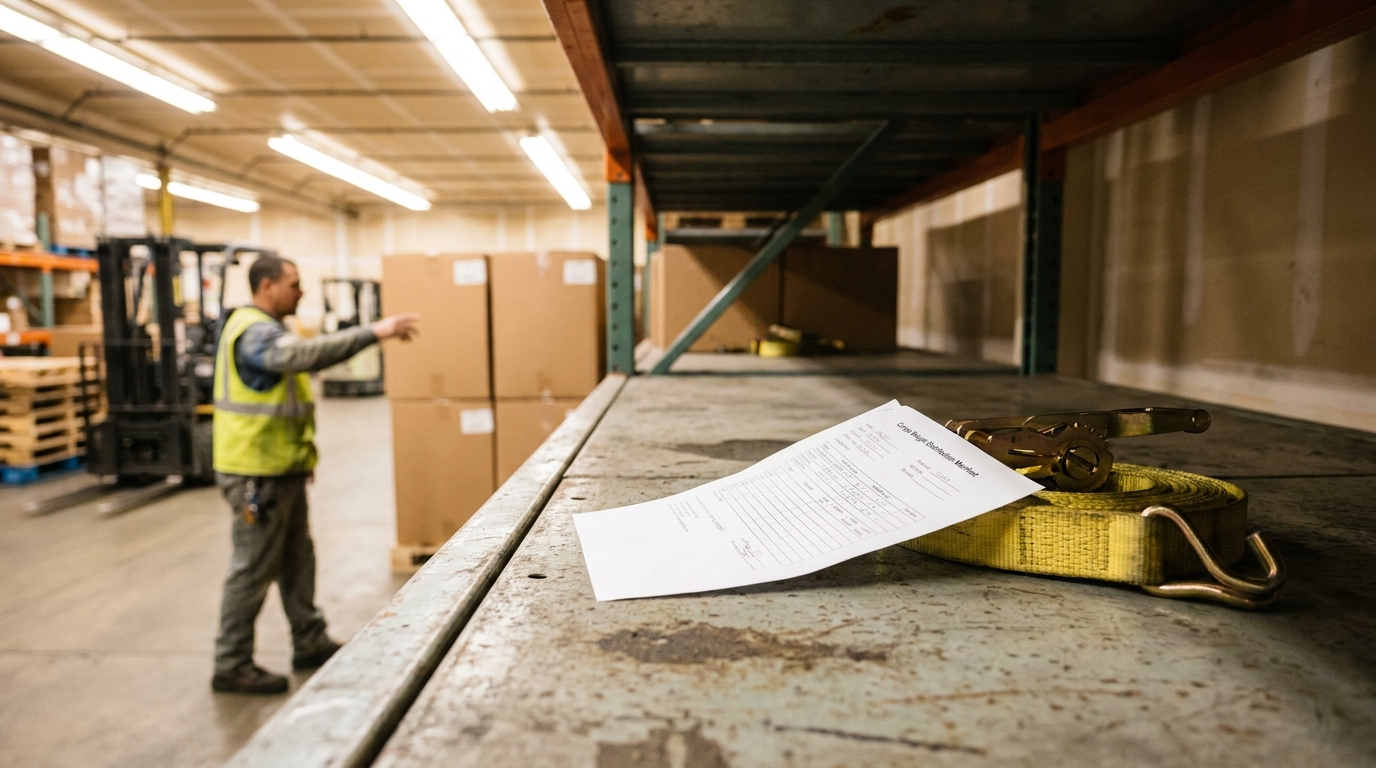
How Cargo Loading Errors Lead to Serious Truck Wrecks
Cargo problems change the physics of how a commercial truck behaves on the road. A fully loaded tractor-trailer can weigh up to 80,000 pounds, and when that weight is distributed incorrectly, even ordinary driving becomes dangerous. When loading companies fail to follow strict weight distribution protocols, even routine lane changes or curves can become deadly.
Common loading mistakes that contribute to a truck wreck include:
- Overloading the trailer beyond legal or safe weight limits, which strains brakes and tires
- Uneven weight distribution that makes the trailer unstable in turns
- Inadequate cargo securement, allowing freight to slide or fall
- Stacking heavy items too high and raising the truck’s center of gravity
- Failing to account for shifting liquids or loose materials during transit
Each of these errors creates a different hazard, but the outcome is frequently the same. An overloaded truck may experience brake failure on a downhill grade, while a cargo securement problem can send debris across multiple lanes. These are preventable breakdowns in safety procedures that federal and state regulations are designed to stop.
💡 Pro Tip: If you witness cargo spilled across the roadway after a crash, take photos from a safe distance. That visual evidence can help establish that improper loading played a role.
Who Can Be Held Liable for a Cargo-Related Truck Accident
Liability in a cargo loading truck accident is rarely limited to the driver alone. Multiple businesses and individuals may share responsibility depending on who loaded, secured, and inspected the freight. Ohio law lets you seek compensation from anyone whose negligence caused a truck accident. Identifying every responsible party is essential to pursuing full recovery.
Potentially Responsible Parties
Several parties may bear fault when cargo loading causes a truck crash. Shipping and loading companies are potentially liable parties in truck accidents in Ohio, but they’re not the only ones. The truck driver, motor carrier, third-party loading contractors, and maintenance providers may all contribute. In some situations, a manufacturer of defective securing equipment may also be liable under product liability theory.
| Party | Possible Role in a Cargo Crash |
|---|---|
| Loading/shipping company | Improper weight distribution or securement |
| Truck driver | Failing to inspect or report unsafe loads |
| Motor carrier | Inadequate training or supervision |
| Equipment manufacturer | Defective straps, chains, or tie-downs |
When more than one party contributes to the same crash, Ohio law provides a framework for sorting out fault. If more than one party is at fault, comparative negligence laws come into play. A knowledgeable truck accident attorney can investigate each link in the supply chain to determine where the breakdown occurred. You can learn more by reviewing this overview of truck accident liability in Ohio.
💡 Pro Tip: Request that the trucking company preserve its loading records and bills of lading in writing as soon as possible. These documents can disappear quickly without a formal preservation demand.
Proving Fault: What an Ohio Truck Accident Lawyer Looks For
Proving that a cargo loading error caused your crash depends heavily on physical and documentary evidence. Establishing duty, breach, causation, and damages requires careful reconstruction of how the load was prepared and how it failed. A seasoned Ohio truck accident lawyer typically begins by gathering records that reveal what happened before the wheels left the loading dock.
Key Evidence in Cargo Loading Cases
Several categories of evidence commonly determine fault in these claims. Evidence types include ELD records, dash cam footage, maintenance logs, eyewitness accounts, and police reports. Loading manifests, weight tickets, and securement inspection logs are equally important. Because trucking companies control much of this evidence, prompt action matters.
A modified comparative fault analysis often shapes how these cases resolve. Ohio follows a modified comparative negligence rule, meaning you can recover damages as long as your fault is not greater than the combined fault of all other parties. Under Section 2315.33, contributory fault doesn’t bar recovery unless the plaintiff is more than 50% at fault. You can review the full statutory language governing contributory fault and recovery for precise text. Even where some fault is assigned, the court reduces compensatory damages proportionally.
💡 Pro Tip: Keep a personal file of every medical bill, repair estimate, and missed-work record. Organized documentation strengthens your damages claim and helps your legal team value the case accurately.
Damages and Deadlines in Ohio Cargo Loading Truck Accident Claims
Injured victims may pursue both economic and noneconomic damages after a cargo-related truck wreck. Economic damages cover measurable losses like medical expenses and lost wages, while noneconomic damages address pain and suffering. Under Section 2315.18, noneconomic damages are generally limited to the greater of $250,000 or three times economic damages, up to a maximum of $350,000 per plaintiff or $500,000 per occurrence. These caps don’t apply to certain catastrophic injuries, such as permanent substantial physical deformity or loss of a limb or bodily organ system.
Punitive damages may also be available, but only under demanding standards. Section 2315.21 requires clear and convincing evidence of malice or aggravated or egregious fraud, and punitive damages are generally capped at twice the compensatory damages. These awards are the exception rather than the rule.
Timing is one of the most important factors in any truck accident claim. In Ohio, you have two years from the crash date to take legal action. This reflects the statutory rule that an action for bodily injury or property damage must generally be brought within two years after the cause of action accrues. While limited exceptions such as the discovery rule may apply in certain circumstances, Ohio courts interpret these narrowly. To understand how these rules apply to your situation, consult an experienced truck accident attorney who handles Dayton Ohio commercial truck accident matters.
💡 Pro Tip: Do not wait for an insurance adjuster’s offer before speaking with a lawyer. Early legal guidance helps you avoid statements that could reduce your recovery.
Frequently Asked Questions
1. Can I still recover compensation if I was partly at fault for the crash?
Possibly, yes. You can recover damages even if partially at fault, as long as your contributory fault is not greater than the combined fault of all other parties. Your award would be reduced by your assigned percentage of fault.
2. What if the loading company and the driver are both responsible?
Ohio law allows fault to be shared among multiple parties. When contributory fault is asserted and you’re found partially at fault, the court apportions liability among multiple defendants. You may pursue compensation from each negligent party.
3. Does the two-year deadline apply to defective loading equipment claims?
Generally, yes. A product liability claim involving defective cargo securing equipment is subject to the same two-year statute of limitations. Because exceptions are interpreted narrowly, acting promptly is important.
4. What evidence helps prove a cargo loading error caused my crash?
Documentation tied to the load is often decisive. Loading manifests, weight tickets, electronic logging records, and inspection logs help establish improper loading played a role. Because carriers control this evidence, preserving it early is critical.
Taking the Next Step After a Dayton Cargo Truck Crash
Cargo loading errors are a serious and preventable cause of truck accidents in Dayton, leaving victims facing long recoveries and mounting expenses. From overloaded trailers to inadequate securement, these failures often trace back to companies that ignored safety protocols. Ohio law gives injured victims meaningful tools to pursue accountability, including the right to seek compensation from every negligent party. Understanding your rights early can make a significant difference. For more guidance, explore our firm’s legal insights and articles or learn about our approach to representing victims of a Dayton truck accident lawyer claim.
If a cargo loading truck accident has turned your life upside down, you don’t have to navigate the aftermath alone. The dedicated team at Horenstein Nicholson & Blumenthal is ready to investigate your crash, preserve key evidence, and pursue the full recovery you deserve. Call us today at (937) 224-7200 or request your consultation online to take the first step toward protecting your future.
Related Posts

What Is Substantial Aggravation of a Pre-Existing Condition in Ohio?
When a Work Injury Makes an Old Problem Much Worse Key Takeaways: In Ohio, a substantial aggravation of a pre-existing condition occurs when a work injury meaningfully worsens an existing health problem, compensable under R.C. § 4123.01(C)(4) only when documented by objective diagnostic findings, objective clinical findings, or objective test results, not subjective pain complaints alone. Ohio’s no-fault system means having a bad back, arthritic joints,…
READ MORE
What Is an MCS-90 Endorsement in a Dayton Truck Accident Claim?
How the MCS-90 Endorsement Truck Accident Protection Actually Works The endorsement is a promise made to the public, not just to the insured carrier. Under 49 CFR 387.15, the insurer agrees to pay any final judgment recovered against the insured for public liability arising from negligent operation of motor vehicles, up to the applicable minimum limit. Because the obligation runs to the public, courts have held…
READ MORE
What Is the No-Zone Around Trucks in Dayton, Ohio?
Understanding the Hidden Danger of Truck Blind Spots on Dayton Roads Key Takeaways: The no-zone is the set of blind spot areas at the front, back, and both sides of a large truck where a smaller vehicle disappears from the driver’s view, creating a core hazard on Dayton roads like I-75 and U.S. 35. The right side is the largest blind spot and the rear leaves…
READ MOREWhat Is a Hit and Run Injury Claim Under Ohio Law for Dayton Victims?
Understanding Your Rights After a Hit-Skip Crash in the Miami Valley Key Takeaways: A hit and run injury claim under Ohio law allows Dayton victims to seek compensation after a driver flees, primarily through their own uninsured motorist (UM) coverage, since Ohio treats a fleeing driver like an uninsured one. Recovery remains possible even when the driver is never identified, provided independent corroborating evidence such as…
READ MORE
Should Dayton Drivers Move a Car After a Minor Ohio Collision?
The Short Answer for Dayton Drivers Facing a Fender Bender Key Takeaways: Dayton drivers can move a car after a minor Ohio collision, but only after fulfilling their legal duties first. Ohio law requires you to stop immediately, remain at the scene, and exchange identifying information including name, address, and vehicle registration before repositioning any vehicle. Once you’ve met those duties and documented the original positions…
READ MORE
What Should Dayton Workers Weigh Before Accepting a Lump Sum Settlement?
Understanding Lump Sum Settlements in Ohio’s Workers’ Comp System Key Takeaways: Before accepting a lump sum settlement (LSS), Dayton workers should weigh immediate financial relief against long-term rights they may permanently give up. An LSS closes all or part of a claim for a one-time payment often discounted to present value. Either party can initiate a settlement under Ohio law, so an employer’s offer may reflect…
READ MORE
What Makes a Dayton Truck Accident Case Harder to Prove Than a Car Crash?
Why Trucking Claims Demand a Different Playbook Than Ordinary Crashes Key Takeaways: A Dayton truck accident case is harder to prove than a car crash because liability can be spread across multiple parties, the driver, carrier, maintenance provider, and cargo loaders, each with separate insurance and defense counsel. Evidence is more technical, requiring driver logs, hours-of-service data, maintenance records, and black box downloads held by trucking…
READ MOREGet HNB to Help You
What our client has to say

Laurie Ruscillo
in Google Reviews
“During a very difficult time, there was compassion and a truly dedicated effort from the staff for a favorable outcome with a disability claim from the Social Security Administration.”
Related Posts
What Is Substantial Aggravation of a Pre-Existing Condition in Ohio?
When a Work Injury Makes an Old Problem Much Worse Key Takeaways: In Ohio, a substantial aggravation of a pre-existing condition occurs when a work injury meaningfully worsens an existing health problem, compensable under R.C. § 4123.01(C)(4) only when documented by objective diagnostic findings, objective clinical findings, or objective test results, not subjective pain complaints alone. Ohio’s no-fault system means having a bad back, arthritic joints,…
READ MORE What Is an MCS-90 Endorsement in a Dayton Truck Accident Claim?
How the MCS-90 Endorsement Truck Accident Protection Actually Works The endorsement is a promise made to the public, not just to the insured carrier. Under 49 CFR 387.15, the insurer agrees to pay any final judgment recovered against the insured for public liability arising from negligent operation of motor vehicles, up to the applicable minimum limit. Because the obligation runs to the public, courts have held…
READ MORE What Is the No-Zone Around Trucks in Dayton, Ohio?
Understanding the Hidden Danger of Truck Blind Spots on Dayton Roads Key Takeaways: The no-zone is the set of blind spot areas at the front, back, and both sides of a large truck where a smaller vehicle disappears from the driver’s view, creating a core hazard on Dayton roads like I-75 and U.S. 35. The right side is the largest blind spot and the rear leaves…
READ MOREWhat Is a Hit and Run Injury Claim Under Ohio Law for Dayton Victims?
Understanding Your Rights After a Hit-Skip Crash in the Miami Valley Key Takeaways: A hit and run injury claim under Ohio law allows Dayton victims to seek compensation after a driver flees, primarily through their own uninsured motorist (UM) coverage, since Ohio treats a fleeing driver like an uninsured one. Recovery remains possible even when the driver is never identified, provided independent corroborating evidence such as…
READ MORE Should Dayton Drivers Move a Car After a Minor Ohio Collision?
The Short Answer for Dayton Drivers Facing a Fender Bender Key Takeaways: Dayton drivers can move a car after a minor Ohio collision, but only after fulfilling their legal duties first. Ohio law requires you to stop immediately, remain at the scene, and exchange identifying information including name, address, and vehicle registration before repositioning any vehicle. Once you’ve met those duties and documented the original positions…
READ MORE What Should Dayton Workers Weigh Before Accepting a Lump Sum Settlement?
Understanding Lump Sum Settlements in Ohio’s Workers’ Comp System Key Takeaways: Before accepting a lump sum settlement (LSS), Dayton workers should weigh immediate financial relief against long-term rights they may permanently give up. An LSS closes all or part of a claim for a one-time payment often discounted to present value. Either party can initiate a settlement under Ohio law, so an employer’s offer may reflect…
READ MORE What Makes a Dayton Truck Accident Case Harder to Prove Than a Car Crash?
Why Trucking Claims Demand a Different Playbook Than Ordinary Crashes Key Takeaways: A Dayton truck accident case is harder to prove than a car crash because liability can be spread across multiple parties, the driver, carrier, maintenance provider, and cargo loaders, each with separate insurance and defense counsel. Evidence is more technical, requiring driver logs, hours-of-service data, maintenance records, and black box downloads held by trucking…
READ MORE


Phone

Hours
AVAILABLE 24/7
OFFICES
Dayton, OH
220 E. Monument Ave.
Suite 305
Dayton, OH 45402