

What Should Dayton Workers Weigh Before Accepting a Lump Sum Settlement?
Understanding Lump Sum Settlements in Ohio’s Workers’ Comp System
Key Takeaways: Before accepting a lump sum settlement (LSS), Dayton workers should weigh immediate financial relief against long-term rights they may permanently give up. An LSS closes all or part of a claim for a one-time payment often discounted to present value. Either party can initiate a settlement under Ohio law, so an employer’s offer may reflect their interests rather than yours. After BWC approval, a 30-day waiting period lets you withdraw, renegotiate, or consult counsel before the agreement becomes binding. Your payment may be reduced by overpayment recoupment, support orders, attorney fees, and subrogation interests. Because settlements have limited appeal rights and may leave you responsible for future medical costs, settling before maximum medical improvement carries real risk. Careful legal review before signing is the best way to protect your future.
A lump sum settlement can feel like a lifeline after a serious workplace injury, but it deserves careful thought before you sign anything. In Ohio, a lump sum settlement (LSS) is a written agreement that closes all or part of your workers’ compensation claim in exchange for a one-time payment. For injured workers in Dayton, the decision involves weighing immediate financial relief against long-term rights you may be giving up.
If you are asking whether a settlement is right for you, the team at Horenstein Nicholson & Blumenthal is ready to help. You can reach our office at 937-224-7200 or request a consultation online to discuss your work injury in Dayton, Ohio.
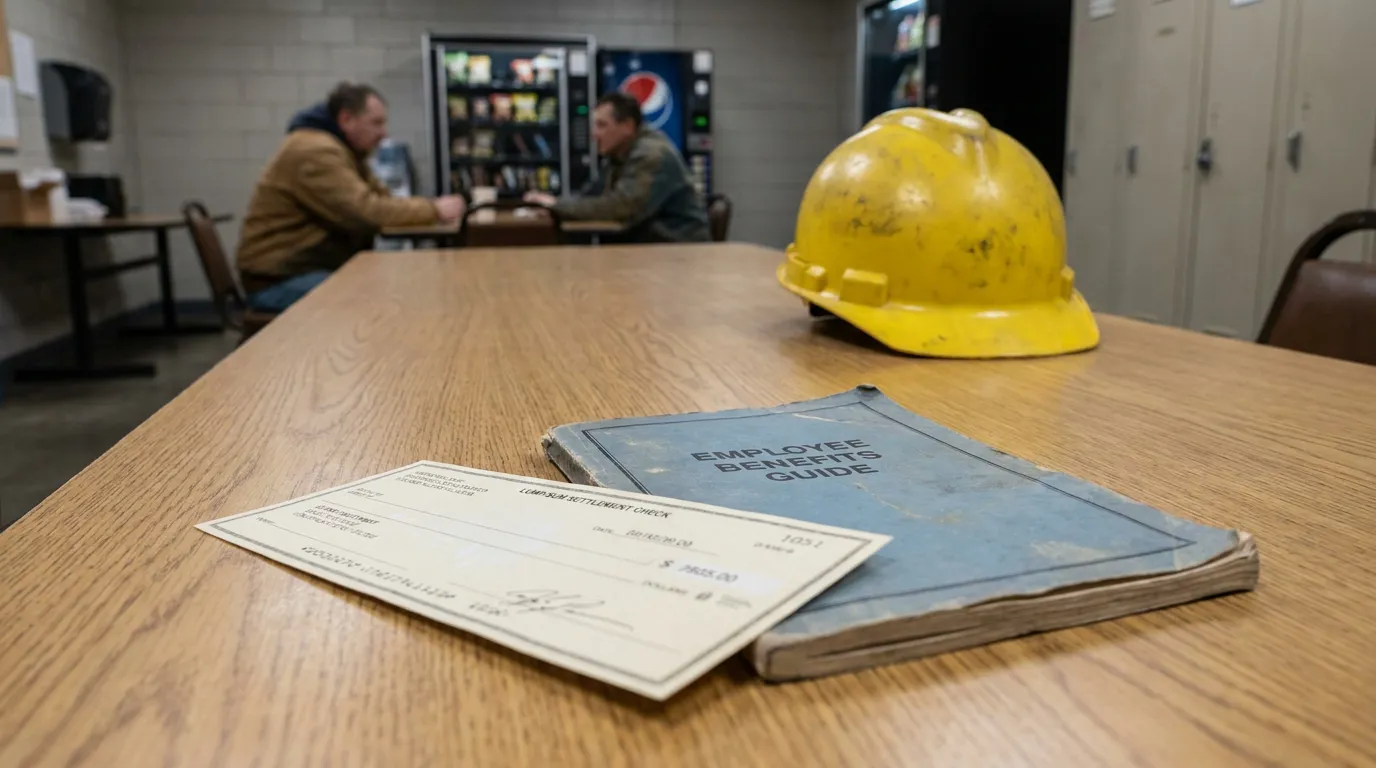
How Ohio Defines a Lump Sum Settlement
A lump sum settlement is not simply a check; it is a legal agreement that changes the status of your claim. Under Ohio Bureau of Workers’ Compensation policy CP-12-01, an LSS is a written agreement that results in claim closure, or partial closure, according to the settlement terms. This agreement may be entered at the administrative, intent to settle, or court level.
Ohio law identifies who can begin the process. Pursuant to Ohio Revised Code 4123.65, a lump sum settlement may be initiated by either the claimant or the employer, and the BWC administrator may also file an application on a party’s behalf. A claimant may even file without the employer’s signature in limited situations, such as when the employer no longer does business in Ohio or has failed to comply with coverage requirements. That distinction matters for injured workers in Dayton, because a settlement offer from an employer or self-insured company may reflect the other side’s interests rather than yours.
💡 Pro Tip: Before responding to any settlement offer, request a full copy of your claim file. Knowing which conditions have been allowed helps you evaluate whether the proposed amount reflects the true scope of your injury.
Should I Settle My Workers Comp Case? Weighing the Core Trade-Offs
The question “should I settle my workers comp case” rarely has a one-size-fits-all answer, because the right choice depends on your medical prognosis, finances, and the terms on the table. A lump sum offers certainty and immediate funds, but generally closes the door on future benefits tied to the settled conditions.
Accepting a lump sum typically means receiving less than the total value of future weekly payments. Ohio Revised Code 4123.64(B) requires the administrator to adopt rules specifying the maximum reduction in compensation allowable. In plain terms, a lump sum is often discounted to present value, so the headline figure may not equal the sum of checks you would otherwise receive over time.
A related trade-off involves advancements against ongoing compensation. Under Ohio Administrative Code rule 4123-3-37, the bureau calculates the net present value of an advancement and determines the resulting reduction in your biweekly rate. You can review calculation details in the state’s rule on advance payment of compensation.
When comparing a structured benefit stream against a single payment, it helps to see the main factors side by side.
| Consideration | Ongoing BWC Benefits | Lump Sum Settlement |
|---|---|---|
| Payment timing | Biweekly over time | One-time payment |
| Claim status | Remains open | Closed in whole or in part |
| Future medical costs | May remain covered | Generally your responsibility once settled |
| Total value | Full statutory value | Often discounted to present value |
| Flexibility | Adjusts with condition | Fixed once effective |
What Happens After You Agree
Signing a settlement does not make it final on the same day. In Ohio, settled pending status begins once the BWC sends the LSS approval letter, starting a 30-day waiting period. During this window, settlement parties may withdraw from or renegotiate the original agreement terms.
That 30-day waiting period is a meaningful protection for injured workers in Dayton. It gives you time to reconsider, gather additional information, or consult counsel. Every settlement also has a defined effective settlement date, which marks when the agreement takes effect and your claim status officially changes.
💡 Pro Tip: Treat the 30-day window as active decision time, not a formality. If new medical information emerges or your condition worsens, this may be your last practical chance to renegotiate.
The formal paperwork matters too. Ohio claim settlements are documented through the Settlement Agreement and Application for Approval of Settlement Agreement, known as the C-240. Understanding that this official application drives the process helps you avoid agreeing to informal terms that are not properly recorded.
Deductions That Can Shrink Your Net Payment
The amount you actually receive can be less than the number on the settlement agreement. Ohio BWC settlements may be reduced or offset by prior obligations, and injured workers should factor these in before accepting a settlement.
Child and family support orders and attorney fees are handled in a defined order. In the BWC family support workflow, payment for attorney fees is made at the end of the 30-day hold if a valid request has been received, and support orders are honored before remaining funds are released. This means the sequence of deductions, not just the gross figure, determines your take-home amount.
Ohio law also builds in a payee protection. Under Ohio Revised Code 4123.64(B)(4), the rules require that all checks include the claimant as a payee, except for checks that specifically cover attorney’s fees under section 4123.06.
Here are common items that can reduce a lump sum before it reaches you:
- Overpayment recoupment for benefits previously paid in error
- Child or family support orders in effect at the time of settlement
- Attorney fee requests processed during the 30-day hold
- Subrogation interests when a third party is responsible for the injury
Discretion, Appeal Rights, and Legal Limits
A lump sum is not an automatic entitlement. Ohio Revised Code 4123.64(A) provides that the administrator, under special circumstances and when deemed advisable for the worker’s financial relief or rehabilitation, may commute payments to one or more lump-sum payments. You can read the full statutory language in the Ohio commutation statute, which frames a lump sum as a discretionary award rather than a guaranteed right.
Appeal rights on these decisions are limited. Under Ohio Revised Code 4123.64(C), a commutation order is appealable pursuant to section 4123.511 but not to court under section 4123.512. By contrast, a negotiated settlement finalized under Ohio Revised Code 4123.65 is not appealable under either section, which is why the 30-day withdrawal window is so important.
💡 Pro Tip: Because a settlement can close your claim permanently, ask your physician whether future medical treatment is likely. Settling before maximum medical improvement may leave you covering later costs on your own.
Subrogation can also shape a settlement. When a third party contributed to your work injury in Dayton, Ohio, reimbursement obligations may affect how much of the settlement you keep. Coordinating any BWC settlement with a third-party claim benefits from careful legal review.
Getting Guidance Before You Decide
Because outcomes depend heavily on your specific facts, general information is a starting point rather than a substitute for tailored advice. A should I settle my workers comp case lawyer can review the offer against your medical evidence, wage-replacement needs, and allowed conditions in your claim.
Reliable, in-state information is available directly from the agency. The Ohio Bureau of Workers’ Compensation explains eligibility, process, and payout on its official lump sum settlement benefit page. For more educational reading, explore our workers comp settlement Dayton resources.
Frequently Asked Questions
-
Can I change my mind after signing a lump sum settlement?
Possibly, but only within a limited window. Once the BWC sends the LSS approval letter, a 30-day waiting period begins during which parties may withdraw or renegotiate. After the effective settlement date, the agreement generally becomes binding.
-
Does a settlement close my entire claim?
Not always. A lump sum settlement in Ohio can close a claim in whole or in part, depending on agreement terms. Reviewing exactly which conditions are being settled is essential.
-
Will I receive the full settlement amount?
Generally not the full gross figure. Deductions such as overpayment recoupment, family support orders, and attorney fees may apply. Subrogation interests can also affect the net amount when a third party is involved.
-
Who can start the settlement process?
Either side can. Under Ohio Revised Code 4123.65, a lump sum settlement may be initiated by the claimant or employer, and the BWC administrator may file on a party’s behalf. An offer from an employer may reflect its interests, so independent review is wise.
-
Can I appeal a lump sum commutation decision?
Only in a limited way. Under Ohio Revised Code 4123.64(C), such an order may be administratively appealed but cannot be appealed to court. Understanding this limit before an order issues can protect your options.
Making a Confident Settlement Decision
Deciding whether to accept a lump sum settlement is one of the most consequential choices in a workers’ compensation claim. For injured workers in Dayton, the analysis comes down to weighing immediate financial relief against closed future rights, discounted value, and potential deductions. The 30-day waiting period, the C-240 process, and limited appeal rights all shape what accepting a settlement really means. Because these outcomes depend on your unique medical and financial situation, careful review before you sign is the best way to protect yourself.
If you are still asking should I settle my workers comp case, let Horenstein Nicholson & Blumenthal help you evaluate your options. Call us at 937-224-7200 or reach out to our team today to discuss your BWC settlement and next steps.
Related Posts

What Is Substantial Aggravation of a Pre-Existing Condition in Ohio?
When a Work Injury Makes an Old Problem Much Worse Key Takeaways: In Ohio, a substantial aggravation of a pre-existing condition occurs when a work injury meaningfully worsens an existing health problem, compensable under R.C. § 4123.01(C)(4) only when documented by objective diagnostic findings, objective clinical findings, or objective test results, not subjective pain complaints alone. Ohio’s no-fault system means having a bad back, arthritic joints,…
READ MORE
What Is an MCS-90 Endorsement in a Dayton Truck Accident Claim?
How the MCS-90 Endorsement Truck Accident Protection Actually Works The endorsement is a promise made to the public, not just to the insured carrier. Under 49 CFR 387.15, the insurer agrees to pay any final judgment recovered against the insured for public liability arising from negligent operation of motor vehicles, up to the applicable minimum limit. Because the obligation runs to the public, courts have held…
READ MORE
What Is the No-Zone Around Trucks in Dayton, Ohio?
Understanding the Hidden Danger of Truck Blind Spots on Dayton Roads Key Takeaways: The no-zone is the set of blind spot areas at the front, back, and both sides of a large truck where a smaller vehicle disappears from the driver’s view, creating a core hazard on Dayton roads like I-75 and U.S. 35. The right side is the largest blind spot and the rear leaves…
READ MOREWhat Is a Hit and Run Injury Claim Under Ohio Law for Dayton Victims?
Understanding Your Rights After a Hit-Skip Crash in the Miami Valley Key Takeaways: A hit and run injury claim under Ohio law allows Dayton victims to seek compensation after a driver flees, primarily through their own uninsured motorist (UM) coverage, since Ohio treats a fleeing driver like an uninsured one. Recovery remains possible even when the driver is never identified, provided independent corroborating evidence such as…
READ MORE
Should Dayton Drivers Move a Car After a Minor Ohio Collision?
The Short Answer for Dayton Drivers Facing a Fender Bender Key Takeaways: Dayton drivers can move a car after a minor Ohio collision, but only after fulfilling their legal duties first. Ohio law requires you to stop immediately, remain at the scene, and exchange identifying information including name, address, and vehicle registration before repositioning any vehicle. Once you’ve met those duties and documented the original positions…
READ MORE
What Makes a Dayton Truck Accident Case Harder to Prove Than a Car Crash?
Why Trucking Claims Demand a Different Playbook Than Ordinary Crashes Key Takeaways: A Dayton truck accident case is harder to prove than a car crash because liability can be spread across multiple parties, the driver, carrier, maintenance provider, and cargo loaders, each with separate insurance and defense counsel. Evidence is more technical, requiring driver logs, hours-of-service data, maintenance records, and black box downloads held by trucking…
READ MORE
How to Protect a Dayton Car Accident Claim From Adjuster Tactics
Why Dayton Drivers Lose Value on Otherwise Strong Claims Key Takeaways: Insurance adjusters minimize payouts using predictable tactics like delays, lowball offers, recorded statements, and inflated fault arguments. To protect a Dayton car accident claim, know what to do after a crash in Ohio before signing anything or giving a statement. Document the scene, seek prompt medical care, and preserve all evidence. Understand Ohio’s modified comparative…
READ MOREGet HNB to Help You
What our client has to say

Laurie Ruscillo
in Google Reviews
“During a very difficult time, there was compassion and a truly dedicated effort from the staff for a favorable outcome with a disability claim from the Social Security Administration.”
Related Posts
What Is Substantial Aggravation of a Pre-Existing Condition in Ohio?
When a Work Injury Makes an Old Problem Much Worse Key Takeaways: In Ohio, a substantial aggravation of a pre-existing condition occurs when a work injury meaningfully worsens an existing health problem, compensable under R.C. § 4123.01(C)(4) only when documented by objective diagnostic findings, objective clinical findings, or objective test results, not subjective pain complaints alone. Ohio’s no-fault system means having a bad back, arthritic joints,…
READ MORE What Is an MCS-90 Endorsement in a Dayton Truck Accident Claim?
How the MCS-90 Endorsement Truck Accident Protection Actually Works The endorsement is a promise made to the public, not just to the insured carrier. Under 49 CFR 387.15, the insurer agrees to pay any final judgment recovered against the insured for public liability arising from negligent operation of motor vehicles, up to the applicable minimum limit. Because the obligation runs to the public, courts have held…
READ MORE What Is the No-Zone Around Trucks in Dayton, Ohio?
Understanding the Hidden Danger of Truck Blind Spots on Dayton Roads Key Takeaways: The no-zone is the set of blind spot areas at the front, back, and both sides of a large truck where a smaller vehicle disappears from the driver’s view, creating a core hazard on Dayton roads like I-75 and U.S. 35. The right side is the largest blind spot and the rear leaves…
READ MOREWhat Is a Hit and Run Injury Claim Under Ohio Law for Dayton Victims?
Understanding Your Rights After a Hit-Skip Crash in the Miami Valley Key Takeaways: A hit and run injury claim under Ohio law allows Dayton victims to seek compensation after a driver flees, primarily through their own uninsured motorist (UM) coverage, since Ohio treats a fleeing driver like an uninsured one. Recovery remains possible even when the driver is never identified, provided independent corroborating evidence such as…
READ MORE Should Dayton Drivers Move a Car After a Minor Ohio Collision?
The Short Answer for Dayton Drivers Facing a Fender Bender Key Takeaways: Dayton drivers can move a car after a minor Ohio collision, but only after fulfilling their legal duties first. Ohio law requires you to stop immediately, remain at the scene, and exchange identifying information including name, address, and vehicle registration before repositioning any vehicle. Once you’ve met those duties and documented the original positions…
READ MORE What Makes a Dayton Truck Accident Case Harder to Prove Than a Car Crash?
Why Trucking Claims Demand a Different Playbook Than Ordinary Crashes Key Takeaways: A Dayton truck accident case is harder to prove than a car crash because liability can be spread across multiple parties, the driver, carrier, maintenance provider, and cargo loaders, each with separate insurance and defense counsel. Evidence is more technical, requiring driver logs, hours-of-service data, maintenance records, and black box downloads held by trucking…
READ MORE How to Protect a Dayton Car Accident Claim From Adjuster Tactics
Why Dayton Drivers Lose Value on Otherwise Strong Claims Key Takeaways: Insurance adjusters minimize payouts using predictable tactics like delays, lowball offers, recorded statements, and inflated fault arguments. To protect a Dayton car accident claim, know what to do after a crash in Ohio before signing anything or giving a statement. Document the scene, seek prompt medical care, and preserve all evidence. Understand Ohio’s modified comparative…
READ MORE


Phone

Hours
AVAILABLE 24/7
OFFICES
Dayton, OH
220 E. Monument Ave.
Suite 305
Dayton, OH 45402