

What Makes a Dayton Truck Accident Case Harder to Prove Than a Car Crash?
Why Trucking Claims Demand a Different Playbook Than Ordinary Crashes
Key Takeaways: A Dayton truck accident case is harder to prove than a car crash because liability can be spread across multiple parties, the driver, carrier, maintenance provider, and cargo loaders, each with separate insurance and defense counsel. Evidence is more technical, requiring driver logs, hours-of-service data, maintenance records, and black box downloads held by trucking companies that may be discarded under retention schedules. Ohio’s modified comparative negligence rule allows recovery only if you are not more than 50% at fault and reduces damages by your assigned percentage, raising the stakes of every fault dispute. Federal motor carrier regulations add complexity absent from ordinary car crashes, and strict filing deadlines can foreclose claims entirely. Acting quickly to preserve evidence and consult a lawyer is essential.
A Dayton truck accident case is generally harder to prove than a car crash because responsibility can be spread across several parties, the evidence is more technical, and the defense often fights aggressively over fault. Truck claims usually involve federal regulations, corporate records, and multiple potential defendants, a combination that raises the difficulty of building a claim and makes early investigation essential.
If you were hurt in a collision with a commercial vehicle, the team at Horenstein Nicholson & Blumenthal is prepared to help you understand your options. Call us at (937) 224-7200 or reach out through our contact page to discuss what happened and how Ohio law may apply.
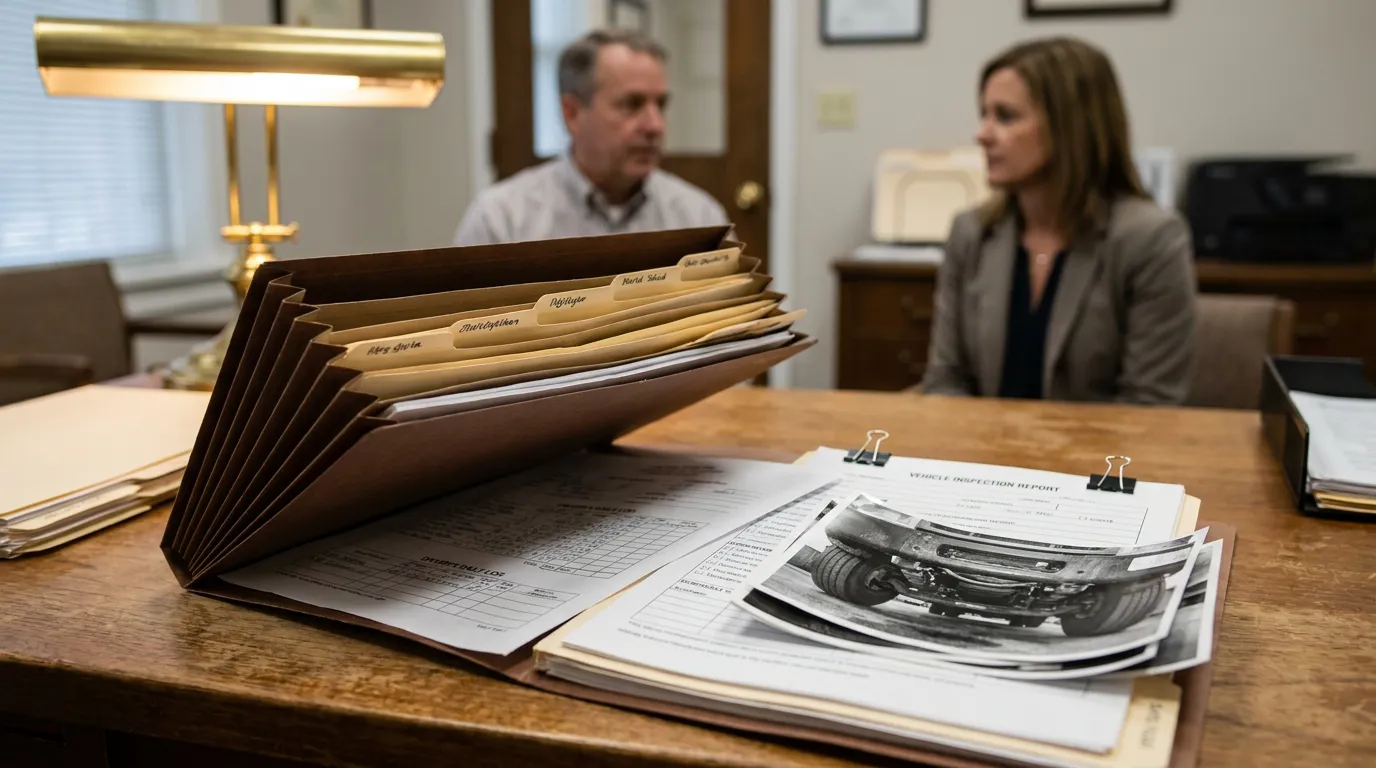
More Parties, More Blame-Shifting
The core reason a truck case is tougher is that liability rarely rests on one person. In a typical car crash, two drivers usually sort out fault. A truck collision is different because responsibility may be divided among the driver, the carrier, a maintenance provider, and others.
Truck accident liability is inherently more complicated because responsibility can be spread across multiple parties. Investigators frequently look at the truck driver, the trucking company, the truck manufacturer, and the companies that loaded cargo. Each party often carries separate insurance and separate defense counsel, and each may try to point blame elsewhere.
This blame-shifting matters directly to your recovery. When several defendants argue that someone else caused the wreck, the plaintiff carries the burden of proving each party’s share of fault. That evidentiary challenge is one of the biggest differences in a Dayton truck crash claim.
💡 Pro Tip: After a serious commercial truck accident in Dayton Ohio, write down the names of every company you can identify, including the logos on the tractor and the trailer. They are sometimes owned by different businesses, which can matter later.
The Evidence Gap in a Truck Accident Versus Car Accident
Proving a truck case requires specialized categories of evidence that a car crash almost never involves. Determining liability generally requires reviewing driver logs, truck maintenance records, and black box data, among other records. That level of documentation separates a truck accident versus car accident from an evidentiary standpoint.
Much of this proof sits in the hands of the trucking company, not the injured person. Electronic control module data, hours-of-service logs, inspection reports, and driver qualification files are the kinds of truck accident evidence Ohio plaintiffs may need to establish a regulatory violation. Because carriers may overwrite or discard some records under their retention schedules, timing is critical.
The types of proof commonly at issue include:
- Electronic data recorder and black box downloads showing speed and braking
- Driver logbooks and electronic hours-of-service records
- Truck maintenance, repair, and inspection histories
- Cargo loading and weight documentation
- Post-crash drug and alcohol testing results
A knowledgeable Dayton truck accident lawyer generally moves quickly to preserve these materials. Preservation letters, sometimes called spoliation letters, can put a carrier on notice that relevant records must be kept. This is one practical reason many injured people consult counsel early.
💡 Pro Tip: Photograph skid marks, debris, and vehicle positions if you can safely do so. Physical scene evidence often disappears within days and can support later expert analysis.
How Ohio’s Comparative Fault Rules Raise the Stakes
Ohio uses a modified comparative negligence system that governs how fault is divided among the parties. Under the modified comparative negligence rule, an injured person can recover damages as long as they are not more than 50% at fault.
The governing statute spells out both the recovery threshold and the reduction for shared fault. Under Ohio Revised Code § 2315.33, the contributory fault of a person does not bar the person as plaintiff from recovering damages… if the contributory fault of the plaintiff was not greater than the combined tortious conduct of all other persons from whom the plaintiff seeks recovery. The same section directs that the court shall diminish any compensatory damages recoverable by the plaintiff by an amount that is proportionately equal to the percentage of tortious conduct of the plaintiff. You can review the full text of this Ohio fault allocation statute.
Comparative negligence directly affects how much an injured party can recover. As a general tort principle, comparative negligence reduces a plaintiff’s recoverable damages according to the degree of negligence each party contributed to the incident. Because Ohio follows a modified rather than pure version, outcomes depend on this specific framework. You can read an overview of these comparative negligence rules to understand the broader landscape.
| Feature | Car Crash | Commercial Truck Crash |
|---|---|---|
| Typical defendants | One other driver | Driver, carrier, maintenance provider, cargo loader |
| Key evidence | Police report, photos | Logs, black box data, maintenance and inspection files |
| Governing fault rule | Modified comparative negligence | Modified comparative negligence |
| Regulatory overlay | Limited | Federal motor carrier regulations may apply |
This is why disputes over fault percentages carry higher stakes in a truck case. When defendants try to assign a larger share of blame to you, every percentage point can reduce your compensatory damages. Proving truck accident negligence Dayton juries will accept often depends on the technical records described above.
Deadlines That Can End a Claim Before It Starts
Ohio injury claims are subject to strict filing deadlines, and missing one usually forecloses recovery regardless of how strong the case is. For many crashes, the limitations clock starts on the date of injury, but exceptions exist that require careful analysis.
In limited circumstances, Ohio’s discovery rule may shift when a claim accrues for latent injuries. Courts generally interpret such exceptions narrowly, so you should not assume that a discovery argument automatically extends your time to file. Product-liability claims, which can arise if a defective truck component is alleged, generally run two years from accrual, with a ten-year statute of repose for some product claims.
Claims involving a government or political subdivision carry their own procedures and deadlines. If a truck is publicly owned or a public entity may share liability, special requirements under Ohio Revised Code Chapter 2744 and § 2744.04 may apply. Section 2744.04 sets its own limitations period and procedural rules that can differ from those in an ordinary case.
💡 Pro Tip: If any government vehicle, road-maintenance contractor, or public agency might be involved, treat the deadline as potentially much shorter and seek guidance right away.
Practical Steps for Injured Dayton Drivers
Taking a few deliberate steps early can protect both your health and your potential claim. These actions generally help preserve the evidence and options that make a difference in complex trucking litigation.
Consider the following:
- Seek prompt medical evaluation and keep all treatment records.
- Report the crash and obtain the official report number.
- Avoid giving a recorded statement to an insurer before getting advice.
- Preserve your damaged vehicle and any physical evidence.
- Contact a Dayton Ohio truck accident attorney to discuss preservation of carrier records.
For readers who want to understand these issues more deeply, our firm regularly publishes educational material. You can explore additional truck accident evidence Ohio articles that break down regulatory and liability concepts in everyday language.
Frequently Asked Questions
1. Why is a truck accident harder to prove than a car accident?
A truck accident is generally harder because multiple parties may share responsibility and the proof is more technical. Liability may involve the driver, the carrier, a maintenance company, and cargo loaders, and establishing each party’s role often requires logs, maintenance files, and black box data.
2. Can I still recover if I was partly at fault for the crash?
Under Ohio Revised Code § 2315.33, you may recover as long as you are not more than 50% at fault. Your compensatory damages are reduced in proportion to your assigned percentage of fault, so fault disputes can significantly affect your recovery.
3. How long do I have to file a truck accident claim in Ohio?
Ohio applies strict deadlines, and for many crashes the clock starts on the date of injury. Certain exceptions may change the timing, but courts interpret those exceptions narrowly, so prompt action is wise.
4. What evidence matters most in a Dayton truck crash claim?
Records held by the trucking company are often the most important evidence. Driver logs, hours-of-service data, maintenance histories, and electronic recorder downloads can help show whether a regulatory violation contributed to the collision.
5. Should I talk to the trucking company’s insurer myself?
In many cases it is prudent to get legal advice before giving any recorded statement. Insurers may use early statements to argue you carry a larger share of fault, which under Ohio’s comparative fault rules could reduce your recovery.
Bringing It All Together
The short answer is that a truck accident versus car accident comparison almost always favors the car case in terms of simplicity. Truck claims involve more defendants, more technical evidence, federal regulatory overlays, and higher-stakes fault disputes governed by Ohio’s modified comparative negligence rule. Add strict filing deadlines and aggressive insurance defense, and the reasons these cases are harder to prove become clear.
If a commercial truck injured you or someone you love in the Dayton area, do not wait to protect your rights. Speak with the attorneys at Horenstein Nicholson & Blumenthal by calling (937) 224-7200 or by scheduling a consultation online so we can review the facts and help you understand your legal options.
Related Posts

What Is Substantial Aggravation of a Pre-Existing Condition in Ohio?
When a Work Injury Makes an Old Problem Much Worse Key Takeaways: In Ohio, a substantial aggravation of a pre-existing condition occurs when a work injury meaningfully worsens an existing health problem, compensable under R.C. § 4123.01(C)(4) only when documented by objective diagnostic findings, objective clinical findings, or objective test results, not subjective pain complaints alone. Ohio’s no-fault system means having a bad back, arthritic joints,…
READ MORE
What Is an MCS-90 Endorsement in a Dayton Truck Accident Claim?
How the MCS-90 Endorsement Truck Accident Protection Actually Works The endorsement is a promise made to the public, not just to the insured carrier. Under 49 CFR 387.15, the insurer agrees to pay any final judgment recovered against the insured for public liability arising from negligent operation of motor vehicles, up to the applicable minimum limit. Because the obligation runs to the public, courts have held…
READ MORE
What Is the No-Zone Around Trucks in Dayton, Ohio?
Understanding the Hidden Danger of Truck Blind Spots on Dayton Roads Key Takeaways: The no-zone is the set of blind spot areas at the front, back, and both sides of a large truck where a smaller vehicle disappears from the driver’s view, creating a core hazard on Dayton roads like I-75 and U.S. 35. The right side is the largest blind spot and the rear leaves…
READ MOREWhat Is a Hit and Run Injury Claim Under Ohio Law for Dayton Victims?
Understanding Your Rights After a Hit-Skip Crash in the Miami Valley Key Takeaways: A hit and run injury claim under Ohio law allows Dayton victims to seek compensation after a driver flees, primarily through their own uninsured motorist (UM) coverage, since Ohio treats a fleeing driver like an uninsured one. Recovery remains possible even when the driver is never identified, provided independent corroborating evidence such as…
READ MORE
Should Dayton Drivers Move a Car After a Minor Ohio Collision?
The Short Answer for Dayton Drivers Facing a Fender Bender Key Takeaways: Dayton drivers can move a car after a minor Ohio collision, but only after fulfilling their legal duties first. Ohio law requires you to stop immediately, remain at the scene, and exchange identifying information including name, address, and vehicle registration before repositioning any vehicle. Once you’ve met those duties and documented the original positions…
READ MORE
What Should Dayton Workers Weigh Before Accepting a Lump Sum Settlement?
Understanding Lump Sum Settlements in Ohio’s Workers’ Comp System Key Takeaways: Before accepting a lump sum settlement (LSS), Dayton workers should weigh immediate financial relief against long-term rights they may permanently give up. An LSS closes all or part of a claim for a one-time payment often discounted to present value. Either party can initiate a settlement under Ohio law, so an employer’s offer may reflect…
READ MORE
How to Protect a Dayton Car Accident Claim From Adjuster Tactics
Why Dayton Drivers Lose Value on Otherwise Strong Claims Key Takeaways: Insurance adjusters minimize payouts using predictable tactics like delays, lowball offers, recorded statements, and inflated fault arguments. To protect a Dayton car accident claim, know what to do after a crash in Ohio before signing anything or giving a statement. Document the scene, seek prompt medical care, and preserve all evidence. Understand Ohio’s modified comparative…
READ MOREGet HNB to Help You
What our client has to say

Laurie Ruscillo
in Google Reviews
“During a very difficult time, there was compassion and a truly dedicated effort from the staff for a favorable outcome with a disability claim from the Social Security Administration.”
Related Posts
What Is Substantial Aggravation of a Pre-Existing Condition in Ohio?
When a Work Injury Makes an Old Problem Much Worse Key Takeaways: In Ohio, a substantial aggravation of a pre-existing condition occurs when a work injury meaningfully worsens an existing health problem, compensable under R.C. § 4123.01(C)(4) only when documented by objective diagnostic findings, objective clinical findings, or objective test results, not subjective pain complaints alone. Ohio’s no-fault system means having a bad back, arthritic joints,…
READ MORE What Is an MCS-90 Endorsement in a Dayton Truck Accident Claim?
How the MCS-90 Endorsement Truck Accident Protection Actually Works The endorsement is a promise made to the public, not just to the insured carrier. Under 49 CFR 387.15, the insurer agrees to pay any final judgment recovered against the insured for public liability arising from negligent operation of motor vehicles, up to the applicable minimum limit. Because the obligation runs to the public, courts have held…
READ MORE What Is the No-Zone Around Trucks in Dayton, Ohio?
Understanding the Hidden Danger of Truck Blind Spots on Dayton Roads Key Takeaways: The no-zone is the set of blind spot areas at the front, back, and both sides of a large truck where a smaller vehicle disappears from the driver’s view, creating a core hazard on Dayton roads like I-75 and U.S. 35. The right side is the largest blind spot and the rear leaves…
READ MOREWhat Is a Hit and Run Injury Claim Under Ohio Law for Dayton Victims?
Understanding Your Rights After a Hit-Skip Crash in the Miami Valley Key Takeaways: A hit and run injury claim under Ohio law allows Dayton victims to seek compensation after a driver flees, primarily through their own uninsured motorist (UM) coverage, since Ohio treats a fleeing driver like an uninsured one. Recovery remains possible even when the driver is never identified, provided independent corroborating evidence such as…
READ MORE Should Dayton Drivers Move a Car After a Minor Ohio Collision?
The Short Answer for Dayton Drivers Facing a Fender Bender Key Takeaways: Dayton drivers can move a car after a minor Ohio collision, but only after fulfilling their legal duties first. Ohio law requires you to stop immediately, remain at the scene, and exchange identifying information including name, address, and vehicle registration before repositioning any vehicle. Once you’ve met those duties and documented the original positions…
READ MORE What Should Dayton Workers Weigh Before Accepting a Lump Sum Settlement?
Understanding Lump Sum Settlements in Ohio’s Workers’ Comp System Key Takeaways: Before accepting a lump sum settlement (LSS), Dayton workers should weigh immediate financial relief against long-term rights they may permanently give up. An LSS closes all or part of a claim for a one-time payment often discounted to present value. Either party can initiate a settlement under Ohio law, so an employer’s offer may reflect…
READ MORE How to Protect a Dayton Car Accident Claim From Adjuster Tactics
Why Dayton Drivers Lose Value on Otherwise Strong Claims Key Takeaways: Insurance adjusters minimize payouts using predictable tactics like delays, lowball offers, recorded statements, and inflated fault arguments. To protect a Dayton car accident claim, know what to do after a crash in Ohio before signing anything or giving a statement. Document the scene, seek prompt medical care, and preserve all evidence. Understand Ohio’s modified comparative…
READ MORE


Phone

Hours
AVAILABLE 24/7
OFFICES
Dayton, OH
220 E. Monument Ave.
Suite 305
Dayton, OH 45402