

What Is an MCS-90 Endorsement in a Dayton Truck Accident Claim?
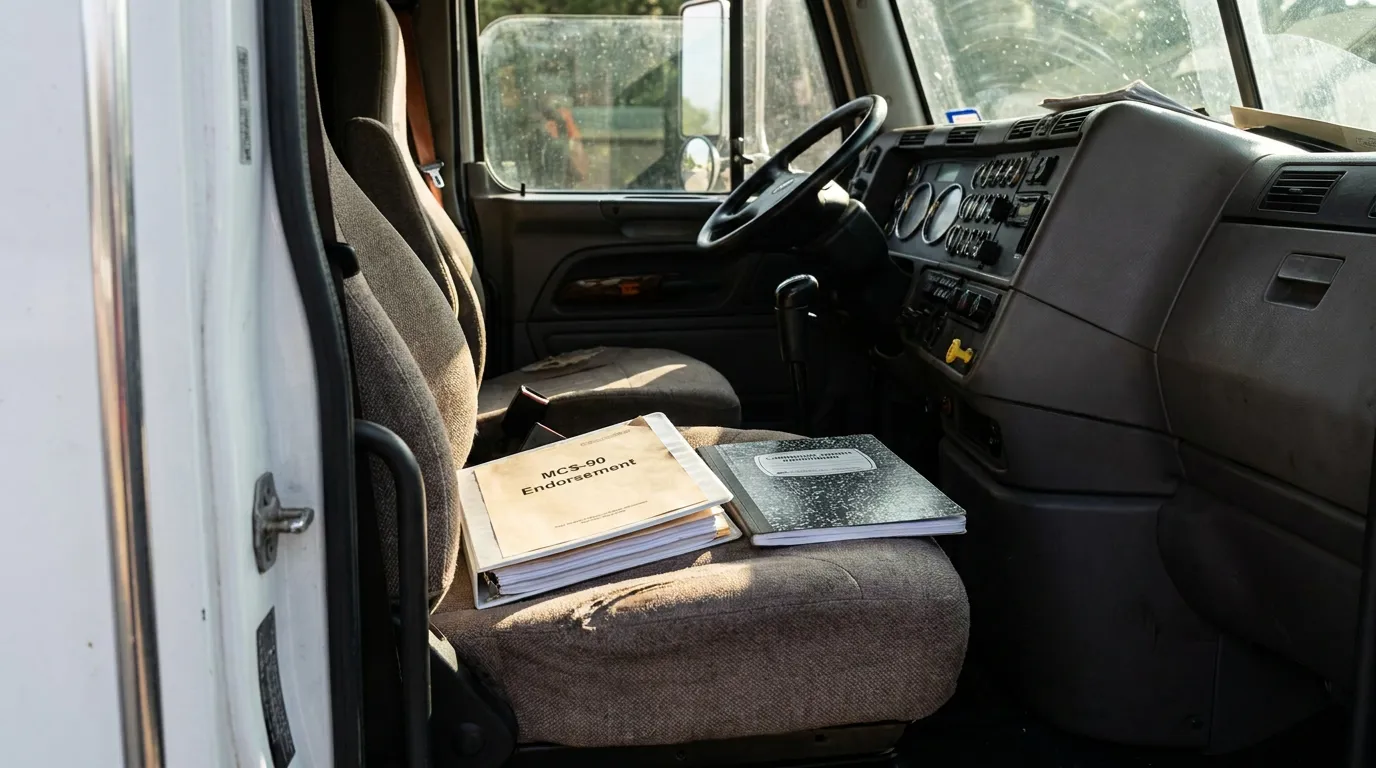
How the MCS-90 Endorsement Truck Accident Protection Actually Works
The endorsement is a promise made to the public, not just to the insured carrier. Under 49 CFR 387.15, the insurer agrees to pay any final judgment recovered against the insured for public liability arising from negligent operation of motor vehicles, up to the applicable minimum limit. Because the obligation runs to the public, courts have held that policy exclusions the insurer could otherwise assert against its policyholder do not defeat it.
Coverage under the form is deliberately broad. The endorsement applies regardless of whether each motor vehicle is specifically described in the policy, and regardless of whether the negligence occurs on a route or territory the insured is authorized to serve. That breadth extends protection when underlying commercial trucking coverage might not respond, such as when a carrier fails to schedule a newly acquired trailer or tractor.
The form survives the carrier’s financial collapse. The MCS-90 endorsement form obligates payment “irrespective of the financial condition, insolvency or bankruptcy of the insured.” For families facing medical bills after a Dayton semi truck claim, that language can mean the difference between a paper judgment and actual recovery. The insurer retains contractual rights to seek reimbursement from the carrier for payments it would not have owed under the policy terms.
Who Counts as the “Insured” Under the Endorsement
This question determines who a crash victim can realistically collect from. Under 49 CFR 387.5, “insured and principal” is defined as the motor carrier named in the policy of insurance, surety bond, endorsement, or notice of cancellation, and also the fiduciary of such motor carrier.
FMCSA guidance confirms the limitation directly. The agency has stated that Form MCS-90 is not intended to require a motor carrier’s insurer to satisfy a judgment against any party other than the carrier named in the endorsement or its fiduciary. A judgment obtained solely against a non-named driver, broker, or shipper generally will not trigger the endorsement.
Practical strategy follows from that rule. Because the endorsement responds to judgments against the named carrier, plaintiffs’ counsel often establish the carrier’s liability through vicarious liability, negligent hiring, negligent supervision, or independent regulatory violations.
💡 Pro Tip: Ask early whether the truck operated under a lease or owner-operator arrangement. The identity of the carrier named on the endorsement may differ from the name painted on the truck’s door.
Minimum Coverage Amounts the Endorsement Backstops
Federal financial responsibility rules set the floor the endorsement guarantees. The amounts vary by operation type and cargo. The figures below reflect federal minimums under 49 CFR Part 387; state law may impose different requirements for purely intrastate operations.
| Type of Operation | Minimum Coverage |
|---|---|
| For-hire property carriers, non-hazardous, 10,001 lbs or more | $750,000 |
| Certain hazardous materials, oil, and hazardous substances or wastes in listed quantities | $1,000,000 |
| Explosives, poison gas, or radioactive materials in listed quantities | $5,000,000 |
| Passenger vehicles carrying 15 or fewer | $1,500,000 |
| Passenger vehicles carrying 16 or more | $5,000,000 |
Carriers may build to those minimums in layers. FMCSA guidance confirms that a motor carrier may aggregate coverage by purchasing insurance in layers with each layer consisting of a separate policy and endorsement. The search for available limits should not stop at the first declarations page.
Distinguishing Filings From Endorsements
Proof-of-insurance filings are not the same as the endorsement itself. FMCSA lists BMC-91, BMC-91X, and BMC-82 as bodily injury and property damage filing forms, separate from the MCS-90 endorsement and the MCS-82 surety bond endorsement. A filing tells the agency that coverage exists; the endorsement creates the payment obligation.
That distinction has practical consequences during a claim. A carrier may show a current filing while the actual endorsement contains different named parties or attaches to a different underlying policy. Counsel will typically request the complete policy, all endorsements, and any excess layers rather than relying on a summary or certificate.
Ohio’s Two-Year Deadline Still Controls Your Claim
No federal endorsement extends Ohio’s filing deadline. Under Ohio Revised Code § 2305.10(A), an action for bodily injury or injuring personal property shall be brought within two years after the cause of action accrues. Different periods apply to related claims, such as the two-year wrongful death limit under R.C. § 2125.02(D), which runs from the date of death.
Exceptions exist but courts construe them narrowly. Ohio law recognizes limited discovery and tolling provisions in specific circumstances, including tolling for minors and persons of unsound mind. A deadline should never be treated as flexible, and any claim involving a governmental entity may involve separate notice requirements. You can review the Ohio statute of limitations text directly.
Why Timing Matters Even More in Trucking Cases
Evidence in commercial trucking cases disappears quickly. Electronic control module data, driver qualification files, hours-of-service logs, dispatch records, maintenance histories, and post-crash drug and alcohol testing results are subject to federal retention periods often far shorter than the limitations period.
Key records that frequently determine liability include:
- Electronic logging device and black box download data
- Driver qualification and training files
- Vehicle inspection, repair, and maintenance records
- Cargo loading and securement documentation
- Bills of lading, dispatch logs, and broker agreements
💡 Pro Tip: Photograph the truck’s DOT number, trailer number, and any placards at the scene if you safely can. Those identifiers help counsel locate the correct carrier and its endorsement filings.
Common Obstacles Injured Claimants Face
Insurers rarely volunteer the existence of an endorsement or excess layers. Adjusters may present a single policy limit and imply it is the ceiling. Thorough investigation examines the FMCSA insurance requirements applicable to that carrier’s authority, the filings on record, and every policy in the tower.
Fault allocation is a second battleground. Ohio applies modified comparative negligence under R.C. § 2315.33, meaning an injured person can recover damages as long as their share of fault is not greater than the combined fault of all other parties, with any recovery reduced in proportion to assigned fault. Carriers frequently attempt to shift blame onto the injured driver, making early witness statements and scene documentation valuable. Learning more about Dayton truck accident claim procedures can help you understand the process.
The interaction between state tort law and federal regulation is genuinely complex. Motor carrier financial responsibility rules create a payment mechanism, but they do not establish negligence or create an independent federal cause of action. A plaintiff must still prove duty, breach, causation, and damages under Ohio law.
Frequently Asked Questions
1. Does an MCS-90 endorsement increase the amount I can recover?
Not directly. The endorsement guarantees payment up to the applicable federal minimum for public liability judgments against the named carrier, but it does not create additional limits beyond what federal financial responsibility rules require. Any recovery above that depends on the underlying policy limits and excess coverage.
2. Does the endorsement apply to intrastate trips within Ohio?
The MCS-90 is tied to for-hire motor carriers operating in interstate commerce under federal authority. Whether it responds to a particular movement that begins and ends in Ohio depends on whether the shipment was part of a continuous interstate journey and the scope of the carrier’s operating authority.
3. What happens if the trucking company goes bankrupt after the crash?
The endorsement obligates the insurer to pay irrespective of the financial condition, insolvency, or bankruptcy of the insured. That protection is one of the endorsement’s most significant features for injured claimants, though bankruptcy proceedings may still affect the timing and procedure of a claim.
4. Can I still file if I was partially responsible for the collision?
Possibly. Under Ohio’s modified comparative negligence rule, you may recover as long as your share of fault is not greater than the combined fault of other parties, with damages reduced by your percentage of responsibility. Fault allocation is fact-specific and frequently disputed.
5. How soon should I contact an attorney after a truck crash?
As soon as practical. The two-year limitations period is only part of the picture, since critical electronic and paper evidence may be overwritten or discarded long before that deadline. For more trucking and injury topics, our Ohio injury law insights cover related issues.
Protecting Your Recovery After a Commercial Truck Collision
The MCS-90 endorsement is meaningful protection built into federal trucking insurance, helping ensure that injured members of the public have a path to compensation when a negligent carrier’s coverage would otherwise fall short. It applies broadly across vehicles and territories, survives carrier insolvency, and rests on federal minimum limits that vary by cargo and passenger capacity. At the same time, it generally reaches only final judgments against the named carrier, does not extend Ohio’s two-year filing deadline, and does not substitute for proving negligence.
If a commercial truck has upended your life, do not let insurance complexity or a passing deadline limit what you recover. The team at Horenstein Nicholson & Blumenthal is respected for handling serious trucking cases throughout the Miami Valley. Call (937) 224-7200 or request your case review today.
Credibility Records Reference
Related Posts

What Is Substantial Aggravation of a Pre-Existing Condition in Ohio?
When a Work Injury Makes an Old Problem Much Worse Key Takeaways: In Ohio, a substantial aggravation of a pre-existing condition occurs when a work injury meaningfully worsens an existing health problem, compensable under R.C. § 4123.01(C)(4) only when documented by objective diagnostic findings, objective clinical findings, or objective test results, not subjective pain complaints alone. Ohio’s no-fault system means having a bad back, arthritic joints,…
READ MORE
What Is the No-Zone Around Trucks in Dayton, Ohio?
Understanding the Hidden Danger of Truck Blind Spots on Dayton Roads Key Takeaways: The no-zone is the set of blind spot areas at the front, back, and both sides of a large truck where a smaller vehicle disappears from the driver’s view, creating a core hazard on Dayton roads like I-75 and U.S. 35. The right side is the largest blind spot and the rear leaves…
READ MOREWhat Is a Hit and Run Injury Claim Under Ohio Law for Dayton Victims?
Understanding Your Rights After a Hit-Skip Crash in the Miami Valley Key Takeaways: A hit and run injury claim under Ohio law allows Dayton victims to seek compensation after a driver flees, primarily through their own uninsured motorist (UM) coverage, since Ohio treats a fleeing driver like an uninsured one. Recovery remains possible even when the driver is never identified, provided independent corroborating evidence such as…
READ MORE
Should Dayton Drivers Move a Car After a Minor Ohio Collision?
The Short Answer for Dayton Drivers Facing a Fender Bender Key Takeaways: Dayton drivers can move a car after a minor Ohio collision, but only after fulfilling their legal duties first. Ohio law requires you to stop immediately, remain at the scene, and exchange identifying information including name, address, and vehicle registration before repositioning any vehicle. Once you’ve met those duties and documented the original positions…
READ MORE
What Should Dayton Workers Weigh Before Accepting a Lump Sum Settlement?
Understanding Lump Sum Settlements in Ohio’s Workers’ Comp System Key Takeaways: Before accepting a lump sum settlement (LSS), Dayton workers should weigh immediate financial relief against long-term rights they may permanently give up. An LSS closes all or part of a claim for a one-time payment often discounted to present value. Either party can initiate a settlement under Ohio law, so an employer’s offer may reflect…
READ MORE
What Makes a Dayton Truck Accident Case Harder to Prove Than a Car Crash?
Why Trucking Claims Demand a Different Playbook Than Ordinary Crashes Key Takeaways: A Dayton truck accident case is harder to prove than a car crash because liability can be spread across multiple parties, the driver, carrier, maintenance provider, and cargo loaders, each with separate insurance and defense counsel. Evidence is more technical, requiring driver logs, hours-of-service data, maintenance records, and black box downloads held by trucking…
READ MORE
How to Protect a Dayton Car Accident Claim From Adjuster Tactics
Why Dayton Drivers Lose Value on Otherwise Strong Claims Key Takeaways: Insurance adjusters minimize payouts using predictable tactics like delays, lowball offers, recorded statements, and inflated fault arguments. To protect a Dayton car accident claim, know what to do after a crash in Ohio before signing anything or giving a statement. Document the scene, seek prompt medical care, and preserve all evidence. Understand Ohio’s modified comparative…
READ MOREGet HNB to Help You
What our client has to say

Laurie Ruscillo
in Google Reviews
“During a very difficult time, there was compassion and a truly dedicated effort from the staff for a favorable outcome with a disability claim from the Social Security Administration.”
Related Posts
What Is Substantial Aggravation of a Pre-Existing Condition in Ohio?
When a Work Injury Makes an Old Problem Much Worse Key Takeaways: In Ohio, a substantial aggravation of a pre-existing condition occurs when a work injury meaningfully worsens an existing health problem, compensable under R.C. § 4123.01(C)(4) only when documented by objective diagnostic findings, objective clinical findings, or objective test results, not subjective pain complaints alone. Ohio’s no-fault system means having a bad back, arthritic joints,…
READ MORE What Is the No-Zone Around Trucks in Dayton, Ohio?
Understanding the Hidden Danger of Truck Blind Spots on Dayton Roads Key Takeaways: The no-zone is the set of blind spot areas at the front, back, and both sides of a large truck where a smaller vehicle disappears from the driver’s view, creating a core hazard on Dayton roads like I-75 and U.S. 35. The right side is the largest blind spot and the rear leaves…
READ MOREWhat Is a Hit and Run Injury Claim Under Ohio Law for Dayton Victims?
Understanding Your Rights After a Hit-Skip Crash in the Miami Valley Key Takeaways: A hit and run injury claim under Ohio law allows Dayton victims to seek compensation after a driver flees, primarily through their own uninsured motorist (UM) coverage, since Ohio treats a fleeing driver like an uninsured one. Recovery remains possible even when the driver is never identified, provided independent corroborating evidence such as…
READ MORE Should Dayton Drivers Move a Car After a Minor Ohio Collision?
The Short Answer for Dayton Drivers Facing a Fender Bender Key Takeaways: Dayton drivers can move a car after a minor Ohio collision, but only after fulfilling their legal duties first. Ohio law requires you to stop immediately, remain at the scene, and exchange identifying information including name, address, and vehicle registration before repositioning any vehicle. Once you’ve met those duties and documented the original positions…
READ MORE What Should Dayton Workers Weigh Before Accepting a Lump Sum Settlement?
Understanding Lump Sum Settlements in Ohio’s Workers’ Comp System Key Takeaways: Before accepting a lump sum settlement (LSS), Dayton workers should weigh immediate financial relief against long-term rights they may permanently give up. An LSS closes all or part of a claim for a one-time payment often discounted to present value. Either party can initiate a settlement under Ohio law, so an employer’s offer may reflect…
READ MORE What Makes a Dayton Truck Accident Case Harder to Prove Than a Car Crash?
Why Trucking Claims Demand a Different Playbook Than Ordinary Crashes Key Takeaways: A Dayton truck accident case is harder to prove than a car crash because liability can be spread across multiple parties, the driver, carrier, maintenance provider, and cargo loaders, each with separate insurance and defense counsel. Evidence is more technical, requiring driver logs, hours-of-service data, maintenance records, and black box downloads held by trucking…
READ MORE How to Protect a Dayton Car Accident Claim From Adjuster Tactics
Why Dayton Drivers Lose Value on Otherwise Strong Claims Key Takeaways: Insurance adjusters minimize payouts using predictable tactics like delays, lowball offers, recorded statements, and inflated fault arguments. To protect a Dayton car accident claim, know what to do after a crash in Ohio before signing anything or giving a statement. Document the scene, seek prompt medical care, and preserve all evidence. Understand Ohio’s modified comparative…
READ MORE


Phone

Hours
AVAILABLE 24/7
OFFICES
Dayton, OH
220 E. Monument Ave.
Suite 305
Dayton, OH 45402