

What Is Ohio’s At-Fault System for Dayton Car Accidents?
How Ohio’s At-Fault System Affects Your Dayton Car Accident Claim
If you were injured in a car accident in Dayton, understanding Ohio’s at-fault insurance system is essential to protect your right to compensation. Unlike no-fault states where each driver’s insurance pays regardless of blame, Ohio holds the driver who caused the crash financially accountable for damages. This means proving the other driver’s negligence is central to recovering money for medical bills, lost wages, and pain and suffering. For Dayton residents, knowing how fault is determined, how it impacts your payout, and what rules could limit your recovery can make the difference between fair settlement and walking away with nothing.
If you have questions about a Dayton Ohio car accident claim, the team at Horenstein Nicholson & Blumenthal is ready to help. Call 937-224-7200 or contact us today to discuss your case.
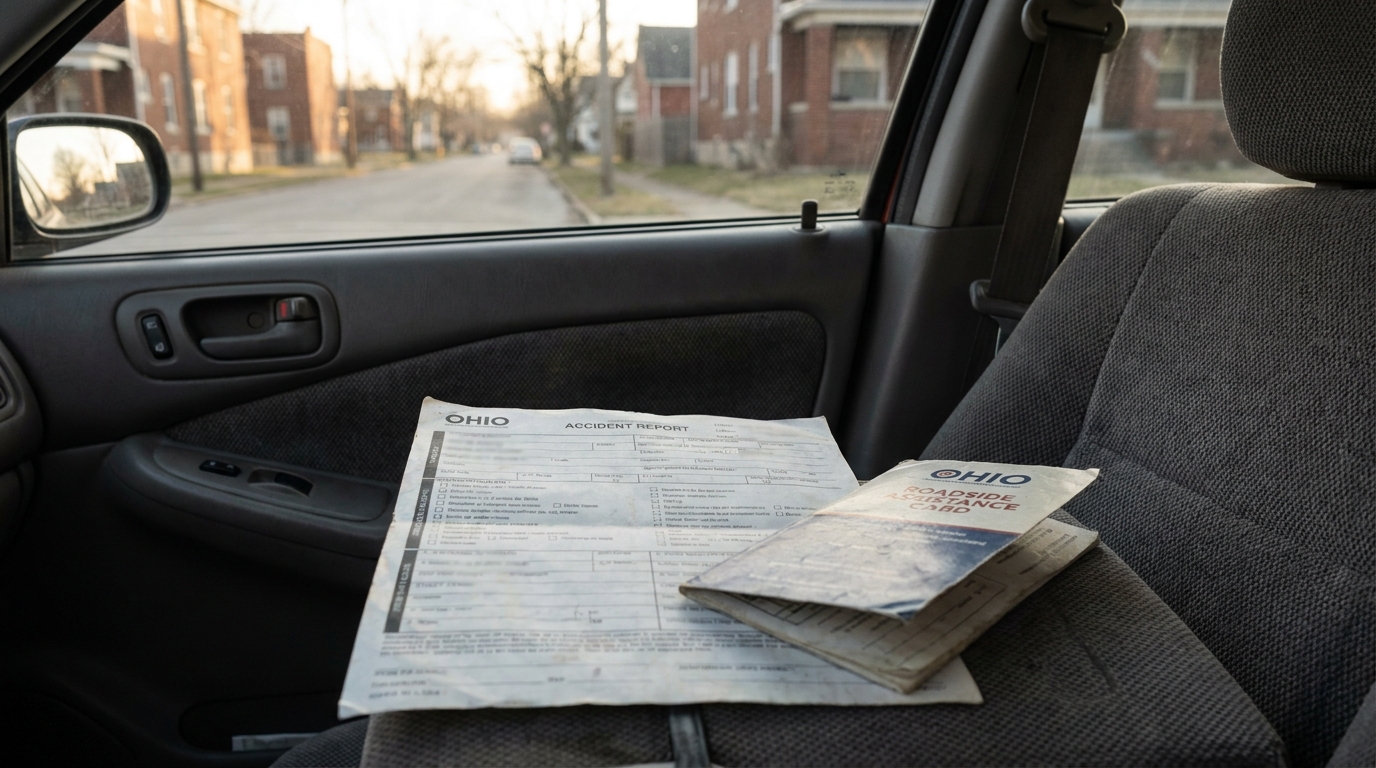
What Does “At-Fault” Mean for Car Accidents in Dayton, Ohio?
Ohio is not a no-fault state for car accidents. Instead, it holds the driver who caused the crash financially accountable for resulting damages. The at-fault driver or their insurance company bears responsibility for your injuries and property damage.
This distinction gives injured drivers in Dayton the right to pursue a claim directly against the at-fault party. You can seek compensation from the negligent driver’s liability coverage or file a personal injury lawsuit. Ohio Revised Code § 3937.22 prohibits insurers from increasing private passenger auto insurance rates based on a single not-at-fault accident during the policy period, reinforcing the importance of fault determination in every claim.
💡 Pro Tip: After any accident in Dayton, document everything at the scene. Photos, witness contact information, and a copy of the police report form the foundation of proving the other driver’s fault and protecting your claim.
How Is Fault Determined After a Dayton Car Crash?
Establishing who caused the accident relies on concrete evidence. Insurance companies and attorneys evaluate police reports, witness statements, and accident reconstruction to determine blame. Each piece helps build a picture of which driver breached their duty of care.
Common Factors That Establish Driver Fault
Certain driving behaviors frequently point toward negligence in Ohio car accident liability cases. Factors that may establish fault include:
- Tailgating or following too closely
- Distracted driving, such as texting or using a phone
- Speeding above posted limits or driving too fast for conditions
- Drunk or impaired driving
- Sudden or unnecessary braking
- Unsafe lane changes or turns
If you were hit by a driver engaged in any of these behaviors, that evidence can significantly strengthen your claim. Police reports often note citations or observed violations, and witness testimony can corroborate what happened. In complex cases, accident reconstruction may be necessary to establish the sequence of events.
💡 Pro Tip: Request a copy of the official police report as soon as possible after your Dayton car accident. Officers may note contributing factors or issue citations that directly support your case when proving the other driver’s negligence.
Ohio’s Modified Comparative Negligence Rule and Your Recovery
Ohio follows a modified comparative negligence rule, which means you can recover damages as long as you’re not more than 50% at fault. This rule is codified in Ohio Revised Code § 2315.33, which states that a plaintiff’s contributory fault does not bar recovery as long as the plaintiff’s fault was not greater than the combined tortious conduct of all other persons from whom the plaintiff seeks recovery in this action AND of all other persons from whom the plaintiff does not seek recovery in this action.
The 51% Bar: When You Lose the Right to Recover
If you are found to be 51% or more at fault for the accident, you are completely barred from recovering any damages under Ohio law. A plaintiff at exactly 50% fault can still recover, but at 51% they cannot. Insurance adjusters are well aware of this rule and may try to shift blame onto you to push your fault percentage above that critical line.
How Proportional Reduction Works
When you share some fault but remain at or below 50%, your compensation is reduced proportionally by your percentage of fault. For example, if you are 20% at fault and the other driver is 80% responsible, your compensation will be reduced by 20%. On a $100,000 claim, you would receive $80,000.
| Your Fault Percentage | Other Driver’s Fault | Claim Value | Your Recovery |
|---|---|---|---|
| 10% | 90% | $100,000 | $90,000 |
| 20% | 80% | $100,000 | $80,000 |
| 50% | 50% | $100,000 | $50,000 |
| 51% | 49% | $100,000 | $0 (barred) |
💡 Pro Tip: Never admit fault at the accident scene or to an insurance adjuster. Even a casual apology can be used to argue you share more blame than you actually do, which directly reduces your compensation under Ohio’s comparative negligence rule.
How Courts Apportion Liability in a Car Accident Attorney in Dayton Cases
When contributory fault is raised as a defense in a Dayton car accident case, Ohio law requires the court to formally apportion liability among the parties if the plaintiff is entitled to recover from more than one party. Under Ohio Revised Code § 2315.36, if contributory fault is asserted as an affirmative defense, the plaintiff was contributorily at fault and that fault was a direct and proximate cause of the injury, and the plaintiff is entitled to recover from more than one party, the court must enter judgment apportioning liability among the parties pursuant to Ohio Revised Code § 2307.22.
When a plaintiff is entitled to recover from more than one party, the court enters judgment pursuant to Ohio Revised Code § 2307.22. Under this statute, a defendant found to be more than 50% at fault may be held jointly and severally liable for all economic damages, while a defendant found to be 50% or less at fault is generally liable only for their proportionate share of economic damages. For Dayton accident victims dealing with multi-vehicle collisions or cases involving both a negligent driver and a third party, this framework ensures each responsible party is held accountable according to their degree of fault.
💡 Pro Tip: If multiple parties contributed to your accident, such as two negligent drivers or a driver and a vehicle manufacturer, an experienced attorney can help identify all potentially liable parties to maximize your total recovery.
Ohio Insurance Requirements and What They Mean for Your Claim
Ohio’s minimum liability insurance requirements are $25,000 per person for bodily injury, $50,000 per accident for bodily injury, and $25,000 for property damage. While these amounts may sound sufficient, serious injuries from car accidents in Dayton Ohio often result in medical bills and lost income that far exceed minimum policy limits.
Ohio law does not require insurers to offer uninsured and underinsured motorist coverage with every auto policy. UM/UIM coverage is optional and is not automatically included in a policy unless the insurer chooses to include it. If the driver who hit you carries no insurance or insufficient coverage, your own UM/UIM policy may help cover the gap if you have such coverage. A car accident attorney in Dayton can evaluate which policies apply to your situation.
Steps to Protect Your Rights After a Dayton Car Accident
Taking the right actions immediately after a crash can significantly strengthen your ability to recover fair compensation. Ohio’s fault-based system places the burden on you to prove the other driver’s negligence, so preserving evidence early is critical.
Gather and Preserve Evidence
Start collecting evidence at the scene if physically able. Photograph vehicle damage, road conditions, traffic signals, and visible injuries. Get names and phone numbers of witnesses. This evidence supports the core elements of your negligence claim: duty, breach, causation, and damages.
Seek Medical Treatment Promptly
Visit a doctor as soon as possible, even if you feel fine initially. Medical records create a direct link between the accident and your injuries. Gaps in treatment give insurance companies ammunition to argue your injuries are not serious or were caused by something else.
Avoid Speaking with the Other Driver’s Insurance Company
Insurance adjusters for the at-fault driver work to minimize the payout, not to help you. Anything you say can be used to reduce your claim or push your comparative fault percentage higher. You have no obligation to give a recorded statement to the other driver’s insurer.
💡 Pro Tip: Keep a daily journal documenting your pain levels, limitations, and how the injury affects your daily life. This record can serve as powerful evidence of your non-economic damages when negotiating a settlement or presenting your case at trial.
Frequently Asked Questions
1. Can I still recover compensation if I was partially at fault for my Dayton car accident?
Yes, in many cases. Under Ohio’s modified comparative negligence rule in Ohio Revised Code § 2315.33, you can recover damages as long as you are not more than 50% at fault. The statute compares your fault to the combined tortious conduct of all other persons from whom the plaintiff seeks recovery in the action and of all other persons from whom the plaintiff does not seek recovery in the action.
2. What happens if I am found 51% at fault for the crash?
If you are 51% or more at fault, Ohio law bars you from recovering any damages. This is the 51% bar rule derived from § 2315.33, making fault determination one of the most important issues in any Ohio negligence car crash case.
3. How do insurance companies determine fault after a car accident in Ohio?
Insurance companies review police reports, witness statements, photos, and sometimes accident reconstruction analysis to assign fault percentages. Both sides may dispute these findings, which is one reason having legal representation can be critical.
4. What are Ohio’s minimum auto insurance requirements?
Ohio requires drivers to carry at least $25,000 per person and $50,000 per accident in bodily injury liability coverage, plus $25,000 in property damage coverage. UM/UIM coverage is optional and is not automatically included in a policy unless the insurer chooses to include it.
5. What should I do if the at-fault driver has no insurance?
If the at-fault driver is uninsured, you may be able to file a claim under your own uninsured motorist coverage if you have such coverage on your policy. Ohio law does not require insurers to provide UM/UIM coverage with every auto policy. An attorney can help you understand your options and pursue maximum available recovery.
Protecting Your Dayton Car Accident Claim Starts Now
Ohio’s at-fault system gives injured drivers in Dayton a clear path to seek compensation, but that path comes with rules that can reduce or eliminate your recovery if you are not careful. From understanding comparative negligence thresholds to preserving critical evidence, every decision you make after a crash matters. The insurance company for the at-fault driver is not on your side, and knowing your rights under Ohio law is the first step toward a fair outcome. For more information on car accident claims, explore our car accident resources.
The attorneys at Horenstein Nicholson & Blumenthal have extensive experience handling car accident cases throughout Dayton and across Ohio. Call 937-224-7200 or reach out online to schedule a free consultation and learn how we can help you pursue the compensation you deserve.
Related Posts

How to Request a Truck’s Black Box Data After a Dayton Crash
Why Electronic Truck Data Can Make or Break Your Claim Key Takeaways: Modern commercial trucks store electronic data from the Electronic Control Module (ECM) and Electronic Logging Device (ELD) that reveals speed, braking, engine load, and driver hours before a crash. To request truck black box data after a Dayton crash, you must act fast and send a formal spoliation letter to the carrier, as ECM…
READ MORE
What Is a Diminished Value Claim After a Dayton Car Accident?
Understanding Vehicle Value Loss After an Ohio Collision Key Takeaways: A diminished value claim recovers the market value your car loses after a collision, even when repairs restore it to like-new condition, because a recorded accident history reduces what buyers pay. In Ohio, this loss is property damage recoverable from the at-fault driver, supported by Falter v. City of Toledo and Rakich, which allow recovery of…
READ MORE
Can Cargo Loading Errors Cause a Truck Accident in Dayton?
Understanding How Improperly Loaded Cargo Triggers Dayton Truck Crashes Key Takeaways: Cargo loading errors frequently cause truck accidents in Dayton by shifting freight that destabilizes an 18-wheeler and triggers rollovers or jackknifes. Common failures include overloading, uneven weight distribution, inadequate securement, and raised center of gravity. Liability often extends beyond the driver to loading companies, motor carriers, third-party contractors, and equipment manufacturers under Ohio law. Proving…
READ MORE
More Than 17,000 Commercial Crashes Hit Ohio in 2025
Ohio’s Commercial Truck Crash Numbers in 2025 Are Alarming More than 17,000 commercial vehicle crashes have already been recorded in Ohio in 2025, underscoring an ongoing safety crisis on the state’s highways. For families in Dayton and across the Miami Valley, these numbers represent real people dealing with catastrophic injuries, mounting medical bills, and lost income. Whether you were driving on I-75, navigating Route 35, or…
READ MORE
How to Gather Evidence After a Car Accident in Dayton
Why Evidence Matters After a Dayton Car Accident A car accident can upend your life in seconds, and the steps you take immediately afterward may determine the strength of your entire claim. Gathering evidence after a car crash in Dayton is foundational to establishing negligence, documenting injuries, and recovering fair compensation. Ohio recorded over 1,200 traffic fatalities in 2023 alone, with a rate of 10.5 deaths…
READ MORE
What Is a Spoliation Letter in a Dayton Truck Accident Case?
Why Evidence Preservation Can Make or Break Your Dayton Truck Accident Claim Key Takeaways: A spoliation letter is a formal legal demand sent by an attorney to a trucking company requiring it to preserve all evidence related to a truck accident. It protects critical evidence such as black box data, driver logs, maintenance records, and documents that could prove fault and damages. While parties have a…
READ MORE
Can a Dayton Car Accident Attorney Help With an Insurer’s Low Offer?
Why Insurance Companies Offer Less Than Your Claim Is Worth If you have been injured in a car accident in Dayton, Ohio, and received a settlement offer that feels far too low, you are not alone. Insurance companies almost always start with a low initial offer and may argue that your injuries are minor, unrelated, or pre-existing as a deliberate tactic. Many accident victims accept less than…
READ MOREGet HNB to Help You
What our client has to say

Laurie Ruscillo
in Google Reviews
“During a very difficult time, there was compassion and a truly dedicated effort from the staff for a favorable outcome with a disability claim from the Social Security Administration.”
Related Posts
How to Request a Truck’s Black Box Data After a Dayton Crash
Why Electronic Truck Data Can Make or Break Your Claim Key Takeaways: Modern commercial trucks store electronic data from the Electronic Control Module (ECM) and Electronic Logging Device (ELD) that reveals speed, braking, engine load, and driver hours before a crash. To request truck black box data after a Dayton crash, you must act fast and send a formal spoliation letter to the carrier, as ECM…
READ MORE What Is a Diminished Value Claim After a Dayton Car Accident?
Understanding Vehicle Value Loss After an Ohio Collision Key Takeaways: A diminished value claim recovers the market value your car loses after a collision, even when repairs restore it to like-new condition, because a recorded accident history reduces what buyers pay. In Ohio, this loss is property damage recoverable from the at-fault driver, supported by Falter v. City of Toledo and Rakich, which allow recovery of…
READ MORE Can Cargo Loading Errors Cause a Truck Accident in Dayton?
Understanding How Improperly Loaded Cargo Triggers Dayton Truck Crashes Key Takeaways: Cargo loading errors frequently cause truck accidents in Dayton by shifting freight that destabilizes an 18-wheeler and triggers rollovers or jackknifes. Common failures include overloading, uneven weight distribution, inadequate securement, and raised center of gravity. Liability often extends beyond the driver to loading companies, motor carriers, third-party contractors, and equipment manufacturers under Ohio law. Proving…
READ MORE More Than 17,000 Commercial Crashes Hit Ohio in 2025
Ohio’s Commercial Truck Crash Numbers in 2025 Are Alarming More than 17,000 commercial vehicle crashes have already been recorded in Ohio in 2025, underscoring an ongoing safety crisis on the state’s highways. For families in Dayton and across the Miami Valley, these numbers represent real people dealing with catastrophic injuries, mounting medical bills, and lost income. Whether you were driving on I-75, navigating Route 35, or…
READ MORE How to Gather Evidence After a Car Accident in Dayton
Why Evidence Matters After a Dayton Car Accident A car accident can upend your life in seconds, and the steps you take immediately afterward may determine the strength of your entire claim. Gathering evidence after a car crash in Dayton is foundational to establishing negligence, documenting injuries, and recovering fair compensation. Ohio recorded over 1,200 traffic fatalities in 2023 alone, with a rate of 10.5 deaths…
READ MORE What Is a Spoliation Letter in a Dayton Truck Accident Case?
Why Evidence Preservation Can Make or Break Your Dayton Truck Accident Claim Key Takeaways: A spoliation letter is a formal legal demand sent by an attorney to a trucking company requiring it to preserve all evidence related to a truck accident. It protects critical evidence such as black box data, driver logs, maintenance records, and documents that could prove fault and damages. While parties have a…
READ MORE Can a Dayton Car Accident Attorney Help With an Insurer’s Low Offer?
Why Insurance Companies Offer Less Than Your Claim Is Worth If you have been injured in a car accident in Dayton, Ohio, and received a settlement offer that feels far too low, you are not alone. Insurance companies almost always start with a low initial offer and may argue that your injuries are minor, unrelated, or pre-existing as a deliberate tactic. Many accident victims accept less than…
READ MORE


Phone

Hours
AVAILABLE 24/7
OFFICES
Dayton, OH
220 E. Monument Ave.
Suite 305
Dayton, OH 45402