

What Should Dayton Drivers Know About Ohio’s At-Fault System?
If you have been injured in a car accident in Dayton, understanding Ohio’s at-fault system can significantly affect your ability to recover compensation. Ohio operates under a tort, or fault-based, system, meaning the driver responsible for causing a crash is liable for covering the resulting damages, including medical bills, lost wages, and other losses. Knowing how fault is determined, what deadlines apply, and how your actions may influence your claim puts you in a stronger position when dealing with insurance companies.
If you were hurt in a collision caused by someone else’s negligence, Horenstein Nicholson & Blumenthal may be able to help you pursue the compensation you deserve. Call 937-224-7200 or reach out online today to discuss your case.
How Ohio’s At-Fault Insurance System Works for Dayton Drivers
Ohio’s fault-based accident law places financial responsibility on the driver who caused the collision. Unlike no-fault states where each driver’s insurance pays regardless of blame, Ohio requires the at-fault driver’s insurance to compensate the injured party.
For injured drivers, this means you have the right to file a claim against the negligent driver’s liability policy. You may also file a lawsuit if the insurance company refuses to offer a fair settlement. However, the burden falls on you to demonstrate that the other driver was at fault, which is why preserving evidence is critical.
💡 Pro Tip: After any accident, document everything at the scene. Take photos of vehicle damage, road conditions, traffic signals, and visible injuries. This evidence is critical when establishing fault.
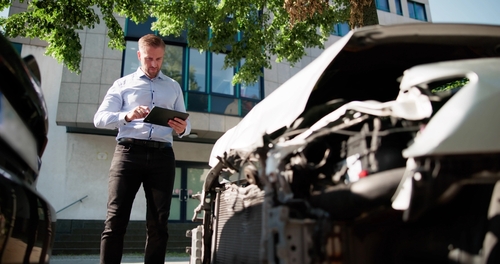
Proving Fault: The Four Elements of Negligence
To hold another driver liable for your injuries, you must establish the four elements of negligence under Ohio law. These elements form the foundation of nearly every car accident claim.
Duty, Breach, Causation, and Damages
Every driver on Ohio roads owes a duty of care to operate their vehicle safely and follow traffic laws. A breach occurs when a driver violates that duty, such as by running a red light, texting while driving, or following too closely. Causation requires showing that the breach directly led to the accident. Finally, you must demonstrate actual damages, meaning real, measurable losses.
- Duty of care: The legal obligation to drive responsibly
- Breach: A specific action or failure that violated the duty
- Causation: A direct link between the breach and the collision
- Actual damages: Documented financial, physical, or emotional harm
Gathering Evidence to Support Your Claim
Building a strong negligence case requires more than just your account of what happened. Police reports, witness statements, medical records, and traffic camera footage can all support your version of events. Ohio law requires reporting car accidents to law enforcement when they involve personal injury, fatality, or property damage exceeding $1,000. You can also learn more about strategies for proving fault after an accident to strengthen your position.
💡 Pro Tip: Seek medical attention immediately, even if you feel fine. Some injuries take hours or days to present symptoms, and gaps in treatment can give insurers reason to question your injuries’ severity.
Ohio’s Modified Comparative Negligence Rule and What It Means for Your Claim
Ohio follows a modified comparative negligence rule, which means you can recover damages as long as you are not more than 50% at fault for the accident. Under Ohio Revised Code § 2315.33, the contributory fault of a plaintiff does not bar recovery if that fault was not greater than the combined tortious conduct of all other parties. This statute has been in effect since April 7, 2005.
The 51% Bar Rule
If you are found to be 51% or more at fault for the accident, Ohio law bars you from recovering any compensation. This threshold is critical. Insurance adjusters frequently attempt to shift as much blame as possible onto the injured driver to reduce or eliminate their payout obligations.
How Damages Are Reduced by Your Percentage of Fault
When a plaintiff is partially at fault but still eligible to recover, the court reduces compensatory damages proportionally. Under § 2315.33, the court diminishes the total compensatory damages by an amount proportionately equal to the plaintiff’s percentage of tortious conduct. For example, if you suffered $100,000 in damages but were found 20% at fault, your recovery would be reduced to $80,000.
| Scenario | Total Damages | Your Fault % | Recovery Amount |
|---|---|---|---|
| Minor contributory fault | $100,000 | 10% | $90,000 |
| Moderate shared fault | $100,000 | 30% | $70,000 |
| Near-threshold fault | $100,000 | 50% | $50,000 |
| Over threshold | $100,000 | 51% | $0 (barred) |
What the Jury Must Determine
When contributory fault is raised as a defense, Ohio Revised Code § 2315.34 requires the jury to answer specific questions through interrogatories. These include the total compensatory damages the plaintiff would have received but for their own fault, the breakdown between economic and noneconomic losses, and the percentage of fault attributable to each party. The court then applies the proportional reduction and bars recovery entirely if the plaintiff’s fault exceeds the combined fault of all other parties.
💡 Pro Tip: Be cautious about giving recorded statements to the other driver’s insurance company without legal guidance. Adjusters may use your words to argue you share more blame than you do.
Key Deadlines: Ohio’s Statute of Limitations for Car Accident Attorney in Dayton Cases
Time is not on your side after a Dayton car accident. Ohio generally imposes a two-year statute of limitations for personal injury claims under Ohio Revised Code § 2305.10 and for property damage claims. This means you have two years from the accident date to file a lawsuit, and missing this deadline can permanently eliminate your right to pursue compensation.
This deadline applies to civil lawsuits filed in court, separate from insurance claims. While certain narrow exceptions may exist under limited circumstances, courts interpret these strictly. Acting promptly helps preserve both your legal options and the evidence needed to support your case.
💡 Pro Tip: Even if you are still receiving treatment, consult with an attorney well before the two-year deadline. Preparing a strong claim takes time.
Steps to Protect Your Dayton Auto Accident Claim
Taking the right steps after an accident can make the difference between a successful claim and a denied one. Ohio’s at-fault system requires you to build a clear, evidence-backed case.
- Request a copy of the police report as soon as available
- Keep detailed records of all medical visits, prescriptions, and therapy sessions
- Save receipts for out-of-pocket expenses related to the accident
- Avoid posting about the accident or your injuries on social media
- Contact an attorney before accepting any settlement offer
Insurance companies often present early settlement offers that fall far short of covering your full losses. These initial offers may not account for future medical treatment, ongoing pain, or the full extent of your lost earning capacity. A Dayton car accident lawyer can evaluate whether an offer truly reflects your claim’s value.
Why Understanding Ohio Car Accident Liability Matters for Your Recovery
Knowledge of Ohio’s fault-based system empowers you to make informed decisions at every stage of your claim. Understanding how negligence is proven, how comparative fault reduces damages, and what deadlines govern your case helps you avoid costly mistakes. Many injured drivers in Dayton unknowingly accept lowball settlements or miss critical deadlines simply because they did not understand their rights.
Every car accident case depends on its specific facts. The percentage of fault assigned, the severity of injuries, and available evidence all influence the outcome. While this article provides a general overview of Ohio law, it should not be treated as individualized legal advice. For guidance on your particular situation, explore additional car accident resources on our website.
💡 Pro Tip: Keep a daily journal documenting your pain levels, mobility limitations, and emotional well-being. This personal record can support claims for noneconomic damages like pain and suffering.
Frequently Asked Questions
1. What does it mean that Ohio is an at-fault state for car accidents?
It means the driver who caused the accident bears financial responsibility for the other party’s damages. The injured driver can file a claim against the at-fault driver’s insurance or pursue a lawsuit to recover compensation.
2. Can I still recover damages if I was partially at fault for my Dayton car accident?
Yes, under Ohio’s modified comparative negligence rule, you can recover damages as long as you are not more than 50% at fault. However, your compensation will be reduced by your percentage of fault. If you are 51% or more responsible, you are barred from recovering anything.
3. How long do I have to file a car accident lawsuit in Ohio?
Ohio generally imposes a two-year statute of limitations for personal injury and property damage claims from the accident date. While narrow exceptions may apply in limited circumstances, courts interpret these strictly, so act promptly.
4. What evidence do I need to prove the other driver was at fault?
You will generally need police reports, photographs from the scene, medical records, witness statements, and any available video footage. Establishing the four elements of negligence, duty of care, breach, causation, and actual damages, is essential.
5. What should I do if the insurance company offers me a quick settlement?
Be cautious before accepting any early offer. Insurance companies may present settlements that do not account for your full medical costs, future treatment, or lost earning capacity. Consult with an attorney before signing anything.
Protect Your Rights After a Dayton Car Accident
Ohio’s at-fault system gives injured drivers the right to seek full compensation from the person who caused their harm, but successfully navigating that system requires understanding the rules of negligence, comparative fault, and filing deadlines. The steps you take immediately after an accident play a significant role in your claim’s strength.
If you or a loved one has been injured in a negligence car crash in Dayton, the team at Horenstein Nicholson & Blumenthal is ready to help you understand your options. Call 937-224-7200 or contact us today for a free consultation.
Related Posts

How to Protect a Dayton Car Accident Claim From Adjuster Tactics
Why Dayton Drivers Lose Value on Otherwise Strong Claims Key Takeaways: Insurance adjusters minimize payouts using predictable tactics like delays, lowball offers, recorded statements, and inflated fault arguments. To protect a Dayton car accident claim, know what to do after a crash in Ohio before signing anything or giving a statement. Document the scene, seek prompt medical care, and preserve all evidence. Understand Ohio’s modified comparative…
READ MORE
Why Are Truck Accident Injuries More Severe Than Car Crash Injuries in Dayton?
The Physics and Law Behind Severe Truck Crash Injuries in the Miami Valley Key Takeaways: Truck accident injuries are far more severe than car crash injuries because commercial trucks weigh 20-30 times more than passenger vehicles, generating crash forces that smaller cars cannot absorb. Height differences create deadly underride risks, while longer stopping distances increase impact speeds. National data confirms occupants of smaller vehicles suffer the…
READ MORE
What Is Negligence Per Se in a Dayton Truck Accident Case?
Understanding How Traffic Violations Can Prove Fault After a Dayton Truck Crash Key Takeaways: Negligence per se lets an injured person establish a truck driver’s breach of duty by showing the driver violated a safety statute, replacing the usual “reasonable person” standard with an objective statutory one. In Dayton truck accident cases, this often involves violations of Ohio’s traffic laws under Chapter 4511, including speeding, reckless…
READ MORE
What Is a Subrogation Claim After a Dayton Car Accident?
Understanding How Insurers Recover Money After an Ohio Crash Key Takeaways: A subrogation claim allows an insurer, auto carrier, or the Ohio Bureau of Workers’ Compensation to recover money paid on your behalf from any settlement with the at-fault driver. Multiple entities can assert these rights, including private health insurers, self-funded employer plans, government payers, and auto carriers paying medical or underinsured motorist benefits. Ohio law…
READ MORE
What Is Ohio’s OVI Law and How Does It Affect Dayton Crash Victims?
Understanding Ohio’s Impaired Driving Laws After a Dayton Crash Key Takeaways: Ohio’s OVI law, codified at R.C. 4511.19, prohibits operating any vehicle while under the influence of alcohol, drugs, or a combination, with per se limits of 0.08 percent BAC and a 0.17 percent high-test threshold. When an impaired driver causes a Dayton crash, the same conduct supporting criminal charges establishes breach of duty in a…
READ MORE
How to Request a Truck’s Black Box Data After a Dayton Crash
Why Electronic Truck Data Can Make or Break Your Claim Key Takeaways: Modern commercial trucks store electronic data from the Electronic Control Module (ECM) and Electronic Logging Device (ELD) that reveals speed, braking, engine load, and driver hours before a crash. To request truck black box data after a Dayton crash, you must act fast and send a formal spoliation letter to the carrier, as ECM…
READ MORE
What Is a Diminished Value Claim After a Dayton Car Accident?
Understanding Vehicle Value Loss After an Ohio Collision Key Takeaways: A diminished value claim recovers the market value your car loses after a collision, even when repairs restore it to like-new condition, because a recorded accident history reduces what buyers pay. In Ohio, this loss is property damage recoverable from the at-fault driver, supported by Falter v. City of Toledo and Rakich, which allow recovery of…
READ MOREGet HNB to Help You
What our client has to say

Laurie Ruscillo
in Google Reviews
“During a very difficult time, there was compassion and a truly dedicated effort from the staff for a favorable outcome with a disability claim from the Social Security Administration.”
Related Posts
How to Protect a Dayton Car Accident Claim From Adjuster Tactics
Why Dayton Drivers Lose Value on Otherwise Strong Claims Key Takeaways: Insurance adjusters minimize payouts using predictable tactics like delays, lowball offers, recorded statements, and inflated fault arguments. To protect a Dayton car accident claim, know what to do after a crash in Ohio before signing anything or giving a statement. Document the scene, seek prompt medical care, and preserve all evidence. Understand Ohio’s modified comparative…
READ MORE Why Are Truck Accident Injuries More Severe Than Car Crash Injuries in Dayton?
The Physics and Law Behind Severe Truck Crash Injuries in the Miami Valley Key Takeaways: Truck accident injuries are far more severe than car crash injuries because commercial trucks weigh 20-30 times more than passenger vehicles, generating crash forces that smaller cars cannot absorb. Height differences create deadly underride risks, while longer stopping distances increase impact speeds. National data confirms occupants of smaller vehicles suffer the…
READ MORE What Is Negligence Per Se in a Dayton Truck Accident Case?
Understanding How Traffic Violations Can Prove Fault After a Dayton Truck Crash Key Takeaways: Negligence per se lets an injured person establish a truck driver’s breach of duty by showing the driver violated a safety statute, replacing the usual “reasonable person” standard with an objective statutory one. In Dayton truck accident cases, this often involves violations of Ohio’s traffic laws under Chapter 4511, including speeding, reckless…
READ MORE What Is a Subrogation Claim After a Dayton Car Accident?
Understanding How Insurers Recover Money After an Ohio Crash Key Takeaways: A subrogation claim allows an insurer, auto carrier, or the Ohio Bureau of Workers’ Compensation to recover money paid on your behalf from any settlement with the at-fault driver. Multiple entities can assert these rights, including private health insurers, self-funded employer plans, government payers, and auto carriers paying medical or underinsured motorist benefits. Ohio law…
READ MORE What Is Ohio’s OVI Law and How Does It Affect Dayton Crash Victims?
Understanding Ohio’s Impaired Driving Laws After a Dayton Crash Key Takeaways: Ohio’s OVI law, codified at R.C. 4511.19, prohibits operating any vehicle while under the influence of alcohol, drugs, or a combination, with per se limits of 0.08 percent BAC and a 0.17 percent high-test threshold. When an impaired driver causes a Dayton crash, the same conduct supporting criminal charges establishes breach of duty in a…
READ MORE How to Request a Truck’s Black Box Data After a Dayton Crash
Why Electronic Truck Data Can Make or Break Your Claim Key Takeaways: Modern commercial trucks store electronic data from the Electronic Control Module (ECM) and Electronic Logging Device (ELD) that reveals speed, braking, engine load, and driver hours before a crash. To request truck black box data after a Dayton crash, you must act fast and send a formal spoliation letter to the carrier, as ECM…
READ MORE What Is a Diminished Value Claim After a Dayton Car Accident?
Understanding Vehicle Value Loss After an Ohio Collision Key Takeaways: A diminished value claim recovers the market value your car loses after a collision, even when repairs restore it to like-new condition, because a recorded accident history reduces what buyers pay. In Ohio, this loss is property damage recoverable from the at-fault driver, supported by Falter v. City of Toledo and Rakich, which allow recovery of…
READ MORE


Phone

Hours
AVAILABLE 24/7
OFFICES
Dayton, OH
220 E. Monument Ave.
Suite 305
Dayton, OH 45402